Have you ever wondered why your LinkedIn profile receives lots of messages as a recruiter and other profiles receive very little?
The thing is that it is not lucky. It’s about optimization.
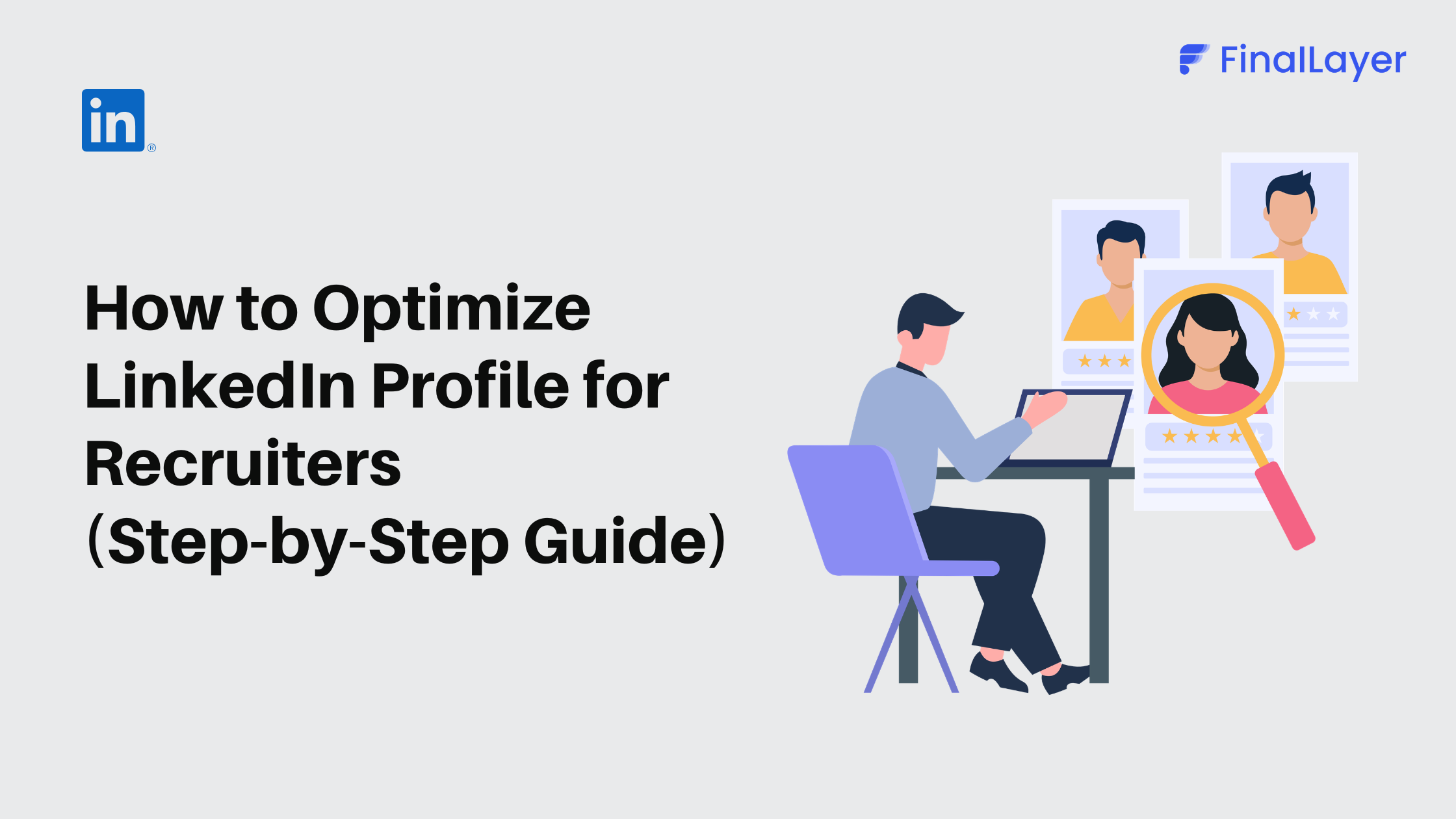
Recruiters do not scroll haphazardly. They use keywords to search, profile scan within seconds, and shortlist candidates who obviously convey value. Unless the profile fits the way recruiters search and assess talent, you remain invisible regardless of your level of skill.
This guide will inform you on how to make your LinkedIn profile the most efficient in recruiter eyes, and provide concrete steps, practical examples and effective techniques to make your presence felt and noticed.
Why LinkedIn Optimization Matters More Than Ever
LinkedIn is no longer a social site, it is a talent search engine.
As Google, recruiters are using LinkedIn:
They browse on job titles, expertise and keywords.
They narrow down the applicants by experience, location and activity.
They look at the profiles in a rapid manner before making the decision to contact them.
Unless you optimize your profile:
You won’t appear in searches
You will not pass the quick scan test.
Even when you are qualified, you will be missing opportunities.
Talking about how to make LinkedIn profile better we actually mean that you have to make your profile searchable, scannable, and persuasive.
Step 1: Start with a Keyword-Optimized Headline
One of the most significant sections of your profile is the headline.
The majority will write something simple such as:
“SEO Specialist at XYZ Company”
That’s a missed opportunity.
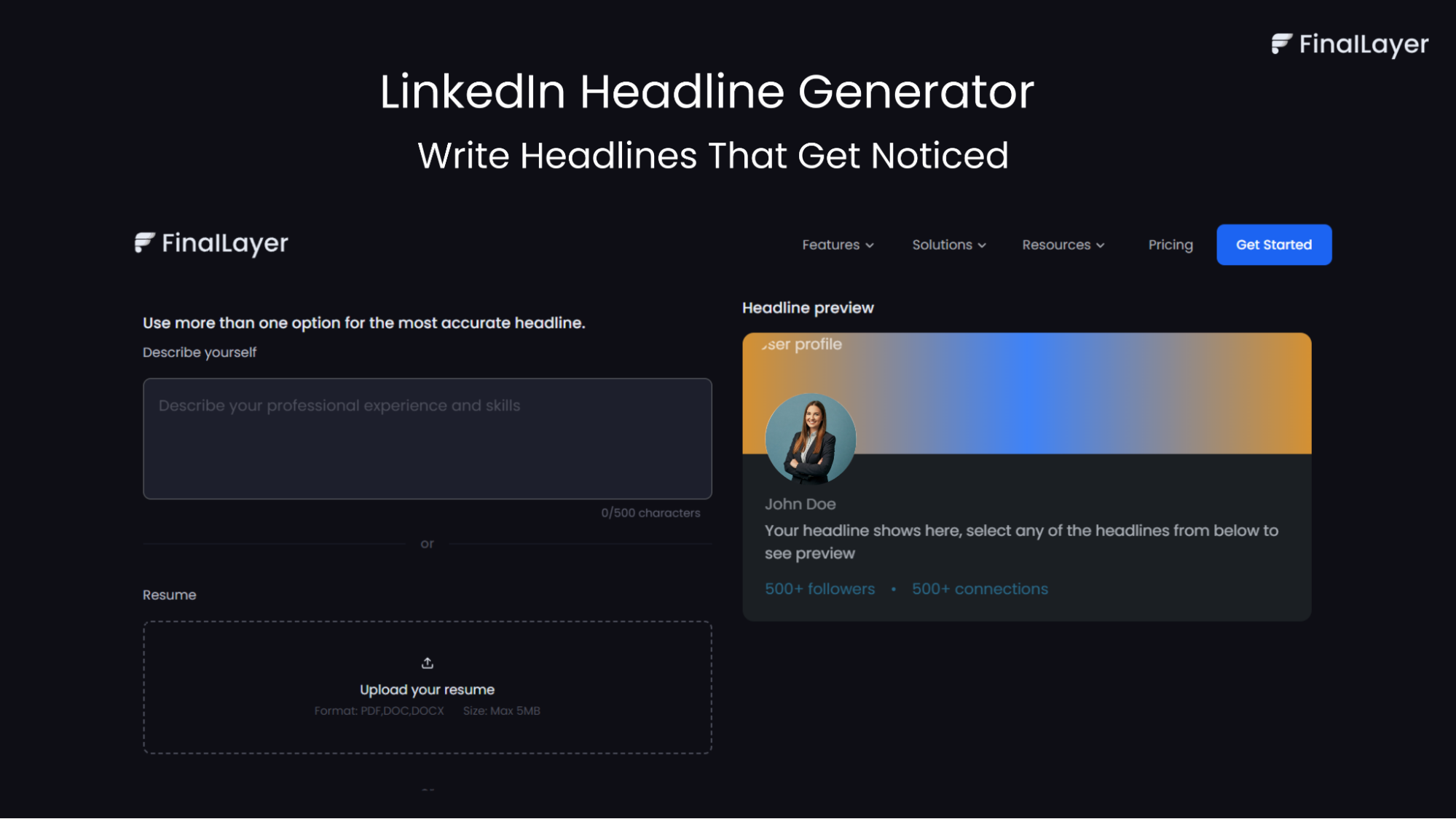
Rather, consider your headline as your own title tag of SEO. You can try our Free LinkedIn Headline Generator that helps you create headlines in mintues.
What Recruiters Look For:
Job role
Skills
Value proposition
Better Example:
SEO Specialist | SaaS Growth | Technical SEO | Driving 3x Organic Traffic
Actionable Tips:
Include your primary role keyword
Add 2–3 core skills
Highlight impact or results
This is the place to begin in case you are calculating how to make your LinkedIn profile optimal to recruiters, since it directly influences search visibility.
Step 2: Turn Your About Section into a Story
The majority of the people consider the About section like the dull summary.
Don’t.
This is where you have the opportunity to relate, distinguish and market your value.
Structure That Works:
1. Hook (Who you are + what you do)
Start with clarity:
“I help SaaS companies grow organic traffic through data-driven SEO strategies.”
2. Proof (Experience + results)
Show credibility:
Increased traffic by X%
Worked with X companies
Specialized in X niche
3. Personality (What makes you unique)
Make it human:
“I’m obsessed with understanding search intent and turning content into growth engines.”
4. CTA (Call to action)
Invite engagement:
“Open to collaborations or opportunities, feel free to reach out.”
Why This Works:
Recruiters don’t just hire skills, they hire people they understand quickly.
Step 3: Optimize Your Experience Section
Your experience section should NOT be a job description copy-paste.
Instead, think of it as a results-driven case study.
Bad Example:
Responsible for SEO
Managed content
Worked on campaigns
Good Example:
Grew organic traffic by 120 percent in 6 months.
Better positioning of 50+ target keywords.
Created content plan which produced 10K visits a month.
Use This Format:
Role + Company
→ What you did
→ How you did it
→ What results you achieved
Pro Tip:
Use numbers and outcomes wherever possible.
This is one of the most critical aspects of linkedin profile examples that actually convert.
Step 4: Add the Right Skills (Not Just Many Skills)
LinkedIn allows you to add up to 50 skills, but more isn’t better.
Recruiters filter profiles based on relevant skills, not random ones.
Focus on:
Core job-related skills
Industry-specific keywords
Tools and technologies
Example (SEO Role):
Technical SEO
Keyword Research
On-page SEO
Google Analytics
Content Strategy
Bonus Tip:
Pin your top 3 skills strategically, these matter the most.
Step 5: Use Keywords Naturally Across Your Profile
This is where most people fail.
They either:
Don’t use keywords
Or stuff them unnaturally
Where to Add Keywords:
Headline
About section
Experience
Skills
Example Keywords:
If your keyword is:
how to optimize your linkedin profile for recruiters, you should also include variations like:
how to improve linkedin profile
linkedin profile examples
linkedin optimization
Key Rule:
Write for humans first, then optimize for search.
Step 6: Make Your Profile “Recruiter-Friendly”
Recruiters are busy.
They scan profiles in 5–10 seconds.
Your goal is to make your profile:
Easy to read
Easy to understand
Easy to trust
How to Do That:
Use short paragraphs
Add bullet points
Highlight achievements
Avoid jargon
Quick Checklist:
- Clear headline
- Strong summary
- Results-driven experience
- Relevant skills
- Professional photo
Step 7: Don’t Ignore Your Profile Photo & Banner
First impressions matter, a lot.
Profiles with professional photos get:
More views
More connection requests
More recruiter messages
Photo Tips:
Clear face
Neutral background
Professional attire
Banner Tips:
Use your banner to show:
Your niche
Your expertise
Your personal brand
Example:
“Helping SaaS companies grow with SEO”
“Content Marketer | LinkedIn Growth”
Step 8: Show Proof with Featured Section
This is your portfolio space.
Use it to showcase:
Case studies
Blog posts
LinkedIn posts
Projects
Example:
If you wrote an article on SEO:
Add it here.
If you worked on a campaign:
Show results.
This builds credibility instantly.
Step 9: Be Active (This Is a Hidden Growth Hack)
Optimization alone isn’t enough.
LinkedIn rewards active users.
What You Can Do:
Post insights
Share learnings
Comment on industry posts
Engage with recruiters
Why This Matters:
Increases profile visibility
Builds authority
Keeps you top-of-mind
If you're serious about how to improve linkedin profile, this step can 10x your results.
Step 10: Turn on “Open to Work” (Strategically)
This feature helps recruiters find you faster.
Best Practices:
Add job titles you're targeting
Choose relevant locations
Select realistic job types
Pro Tip:
You can make this visible only to recruiters, not your current employer.
Read More: LinkedIn for Recruiters: The Complete Guide
Real LinkedIn Profile Examples (What Works)
Let’s break down what high-performing profiles have in common:
Example 1: SEO Specialist
Clear keyword-rich headline
Strong results in experience
Featured section with case studies
Example 2: Content Marketer
Engaging About section
Regular posting activity
Portfolio links
Example 3: Product Manager
Data-driven achievements
Clean, structured profile
Strong endorsements
Key Takeaway:
No matter the role, successful profiles:
Communicate value clearly
Use keywords strategically
Show proof of work
Common Mistakes to Avoid
Even strong candidates make these mistakes:
- Generic headline
- No measurable achievements
- Overloading skills
- No activity on LinkedIn
- Weak About section
Avoiding these alone can significantly improve your profile.
Final Checklist: Optimize Your LinkedIn Profile for Recruiters
Go over this, and then take your leave:
Does your headline contain lots of key words and is it understandable?
Does your About section tell a story?
Do you have result-oriented experiences?
Do you have relevant and focused skills?
Are you using keywords naturally?
Is your profile easy to scan?
Are you active on LinkedIn?
In case yes, you are already continuing 90 percent of the users.
Conclusion
It is not only about making your LinkedIn profile look shinier, it is also about making it strategically findable, easy to browse through, and appealing enough to create interest in a few seconds. Creating a keyword boom headline to displaying quantifiable success and remaining active on the site, all the details contribute to making you the appropriate candidate. By matching your profile to the actual way in which recruiters search and evaluate talent you have made it more than an online resume, it is a potent opportunity attracting device. That is why you should take a moment and check your profile as it is viewed by a recruiter mindset and ask yourself: does it clearly present my value or can I still do something about it to make it impossible to overlook.