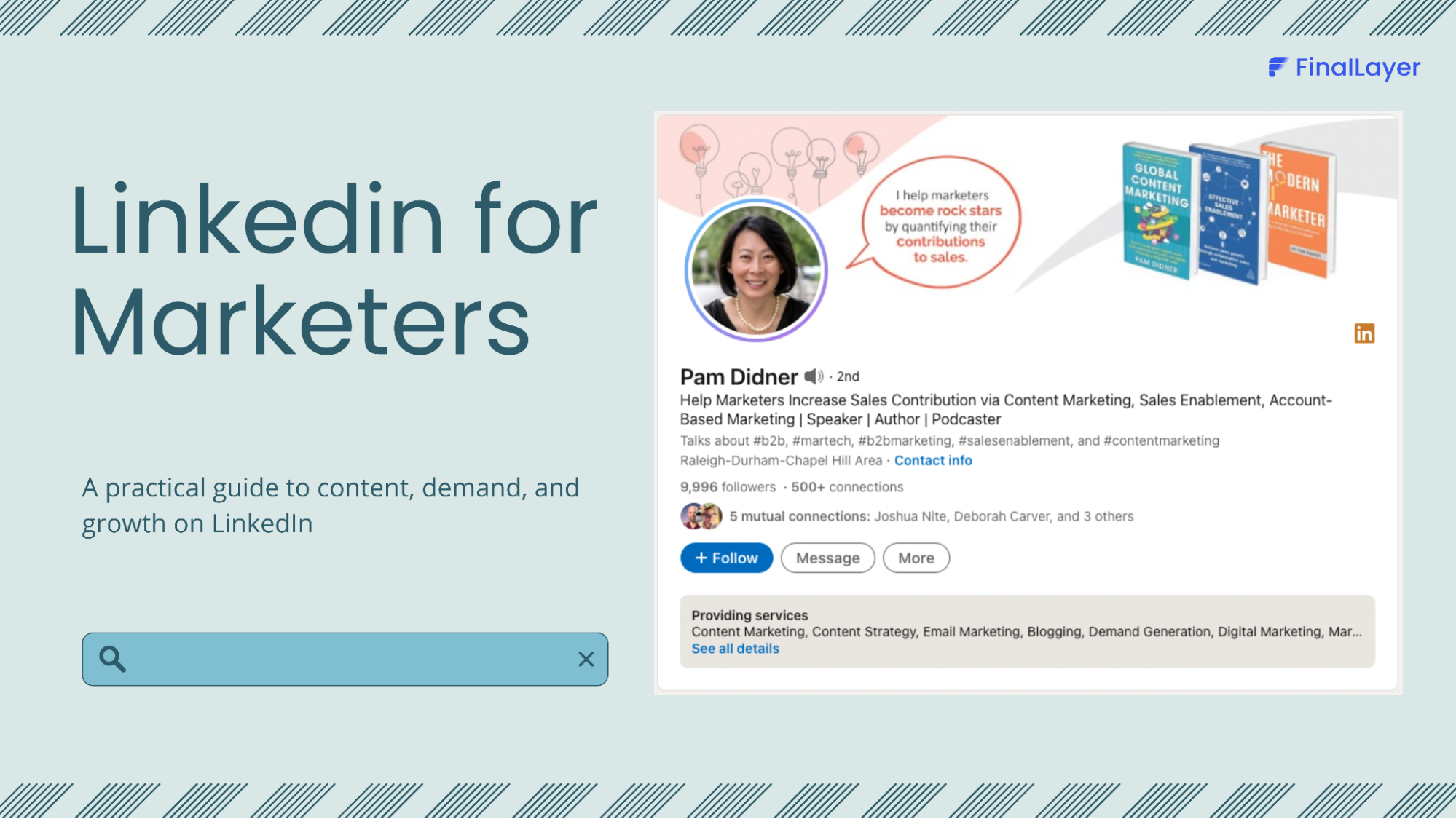
If you’re a marketer today, chances are you’re already on LinkedIn, but you may not be using it to its full potential. What started as a professional networking site has quietly become one of the most powerful platforms for demand generation, brand building, and long-term growth. The challenge? Most advice on linkedin for marketers sounds theoretical or overly B2B marketing heavy.
This guide is different. You’ll learn how linkedin for marketers actually works in practice, what to post, how to think about growth, and how to turn consistent effort into measurable outcomes without burning out.
Why LinkedIn Matters More Than Ever for Marketers
LinkedIn is way too far from being just a digital résumé platform. It’s a content network, a learning hub, and a trust-building engine rolled into one.
A few reasons marketers are doubling down on LinkedIn:
- Organic reach is still stronger than most social platforms
- Decision-makers actively consume content on the feed
- The LinkedIn algorithm rewards consistency and clarity, not virality
- Content has a longer shelf life compared to other platforms
Unlike fast-scrolling platforms, LinkedIn favors thoughtful posts that spark discussion. That makes it ideal for marketers who want sustainable visibility instead of short-lived spikes.
At its core, linkedin marketing works because it blends content, credibility, and community in one place.
Understanding LinkedIn’s Ecosystem for Marketers
Before jumping into tactics, it helps to understand how LinkedIn is structured from a marketer’s point of view.
The Three Key Layers of LinkedIn
- Profiles (People)
Personal profiles are where trust is built. Most high-performing content on LinkedIn still comes from individuals and their personal branding, not brands. - Company Pages
Great for legitimacy, hiring, and announcements, but typically lower organic reach. - The Feed (Distribution Engine)
This is where LinkedIn decides what gets seen. The feed prioritizes relevance, engagement, and consistency over follower count.
LinkedIn for Marketers Starts With Positioning, Not Posting
One of the biggest mistakes marketers make is jumping straight into posting without clear positioning.
Before you write a single post, ask:
- Who exactly is this content for?
- What problem do I consistently help solve?
- Why should someone follow me instead of scrolling past?
Strong linkedin for marketers strategies begin with a clear answer to those questions.
Define Your Content Pillars
Content pillars help you stay consistent without repeating yourself. Most marketers do well with 3–5 pillars, such as:
- Industry insights and trends
- Practical how-to or frameworks
- Personal learnings and experiments
- Opinions or contrarian takes
- Case studies or breakdowns
These pillars ensure your linkedin marketing strategy feels intentional, not random.
What Actually Works on LinkedIn in 2026
Let’s get practical. These formats consistently perform well for marketers across industries.
1. Insight-Driven Text Posts
Simple text posts still dominate LinkedIn.
Why they work:
- Easy to consume
- Encourage comments
- Don’t rely on design skills
Example structure:
- Hook (1–2 lines)
- Context or story
- Clear takeaway
- Open-ended question
This format is a staple of linkedin for marketers because it scales with consistency.
2. Educational Carousels
Carousels are perfect for explaining frameworks or step-by-step ideas.
Use them for:
- “How to” guides
- Process breakdowns
- Checklists and summaries
Keep slides minimal. One idea per slide always outperforms dense text.
3. Storytelling With a Marketing Angle
Stories humanize your brand and expertise.
Good stories often start with:
- A mistake you made
- A failed campaign
- A surprising result from an experiment
End with a lesson that’s useful for other marketers. This approach blends authenticity with authority, exactly what linkedin marketing rewards.
Building a Sustainable LinkedIn Marketing Strategy
Consistency beats intensity on LinkedIn. You don’t need to post every day, but you do need a system.
A Simple Weekly System for Marketers
Here’s a practical workflow:
- Monday: Educational or framework post
- Wednesday: Opinion or insight post
- Friday: Story, reflection, or lesson learned
That’s enough to build momentum without being overwhelmed.
This kind of rhythm is the backbone of a strong linkedin marketing strategy.
LinkedIn B2B Marketing (Without Sounding Corporate)
A lot of marketers struggle with linkedin b2b marketing because it feels stiff or overly formal.
The truth? B2B audiences are still people.
How to Make B2B Content Feel Human
- Write like you speak, not like a brochure
- Share real examples, not generic advice
- Talk about problems, not just solutions
Instead of:
“Our solution enables scalable growth through optimized workflows”
Try:
“We wasted 3 months using the wrong workflow. Here’s what finally worked.”
That shift alone can transform your linkedin b2b marketing results.
Engagement Is a Two-Way Street
Posting is only half the game. The other half is participation.
If you want to reach, you must earn it.
Smart Engagement Habits
- Comment thoughtfully on 5–10 posts per day
- Add perspective, not praise
- Engage within your niche consistently
LinkedIn notices patterns. Active participants get more distribution, which is why engagement is a core part of linkedin for marketers.
Measuring What Actually Matters on LinkedIn
Vanity metrics feel good, but they don’t always reflect progress.
Metrics That Matter for Marketers
Focus on:
- Profile views over time
- Inbound messages and leads
- Comment quality (not just count)
- Follower relevance, not volume
These signals tell you whether your linkedin marketing strategy is building real trust.
Common Mistakes Marketers Make on LinkedIn
Even experienced marketers fall into these traps.
Mistake #1: Posting Without a Point
Every post should answer one question: “Why should someone care?”
Mistake #2: Chasing Trends Blindly
What works for creators may not work for your audience.
Mistake #3: Being Overly Promotional
LinkedIn rewards value, not sales pitches.
Avoiding these mistakes instantly improves your linkedin for marketers efforts.
How Marketers Can Repurpose Content on LinkedIn
One idea can fuel weeks of content.
Here’s how to repurpose effectively:
- Turn a blog post into 3–4 LinkedIn posts
- Convert insights into a carousel
- Share a single stat as a standalone post
- Reflect on what surprised you while writing
Repurposing keeps your linkedin marketing consistent without starting from scratch.
Personal Brand vs Company Page: What Should Marketers Focus On?
Short answer: personal profiles first.
Personal profiles:
- Get higher organic reach
- Feel more authentic
- Spark more conversation
Company pages still matter for:
- Credibility
- Employer branding
- Ads and retargeting
The most effective linkedin marketing strategy uses both, but prioritizes people over logos.
The Long-Term Mindset for LinkedIn Growth
LinkedIn rewards patience.
You may post for weeks with minimal response, and then suddenly see compounding results. That’s normal.
Think of LinkedIn as:
- A reputation engine, not a growth hack
- A conversation platform, not a broadcast channel
- A long-term asset, not a campaign
This mindset shift is crucial for anyone serious about linkedin for marketers.
Final Thoughts
LinkedIn is one of the few platforms where thoughtful marketers can still win organically. By focusing on clarity, consistency, and genuine value, you can turn linkedin for marketers into a predictable growth channel, not just another social feed.