Most people think LinkedIn personal branding is about becoming an influencer or posting motivational quotes daily but actually it’s about strategically positioning yourself as the obvious choice in your field when opportunities arise. With over 930 million professionals on the platform, standing out requires more than a polished headshot, it demands intentional, consistent brand building that resonates with your target audience.
The professionals generating consistent opportunities through LinkedIn personal branding aren't necessarily the most talented. They're the ones who've mastered visibility, credibility, and strategic positioning. Whether you're a consultant seeking clients or an executive building thought leadership, understanding how to build your personal brand on LinkedIn is non-negotiable.
This guide provides a practical approach to LinkedIn personal branding that generates real business results, not just vanity metrics.
Understanding LinkedIn Personal Branding Fundamentals
LinkedIn personal branding is the deliberate process of defining and communicating what you want to be known for professionally. It's how you differentiate yourself in a crowded marketplace and create a memorable impression that leads to opportunities.
Your personal brand answers three critical questions: What expertise do you offer? Who do you serve? Why should people choose you?
Why LinkedIn Personal Branding Matters Now
Decision-makers research potential partners, vendors, and hires on LinkedIn long before reaching out. Your LinkedIn personal branding often determines whether you're considered for opportunities or overlooked entirely.
Strong branding creates multiple advantages: increased visibility, warm inbound leads instead of cold linkedin outreach, premium positioning that commands higher rates, and accelerated trust-building with prospects.
The Strategic Foundation: Positioning Before Publishing
Most professionals approach LinkedIn personal branding backwards, they start posting without establishing clear positioning. This creates scattered messaging that confuses rather than attracts.
Define Your Brand Positioning
Effective LinkedIn personal branding starts with clarity about your professional identity. Define your niche with precision. "Marketing consultant" is too broad. "Helping B2B SaaS companies scale from $1M to $10M through demand generation" creates clear positioning.
Identify your target audience specifically. Who needs your expertise? What challenges do they face? The more precisely you define your audience, the more effectively your messaging resonates.
Establish your unique point of view. What perspective, methodology, or approach differentiates you? Your distinctive perspective becomes your brand signature in LinkedIn personal branding.
Craft Your Brand Narrative
Your brand narrative explains your professional journey in a way that resonates with your target audience. Understanding how to build your personal brand means structuring this around transformation: the problem you encountered, the journey you took to solve it, the expertise you developed, and the results you now deliver.
Building Your Profile Foundation
How to build your personal brand requires optimizing every element of your LinkedIn presence to communicate your positioning consistently.
Profile Optimization Essentials
Profile photo: Use a high-quality, professional headshot with good lighting. Your expression should be approachable yet professional, this is your first brand impression.
Read more: How To Take The Best Profile Picture
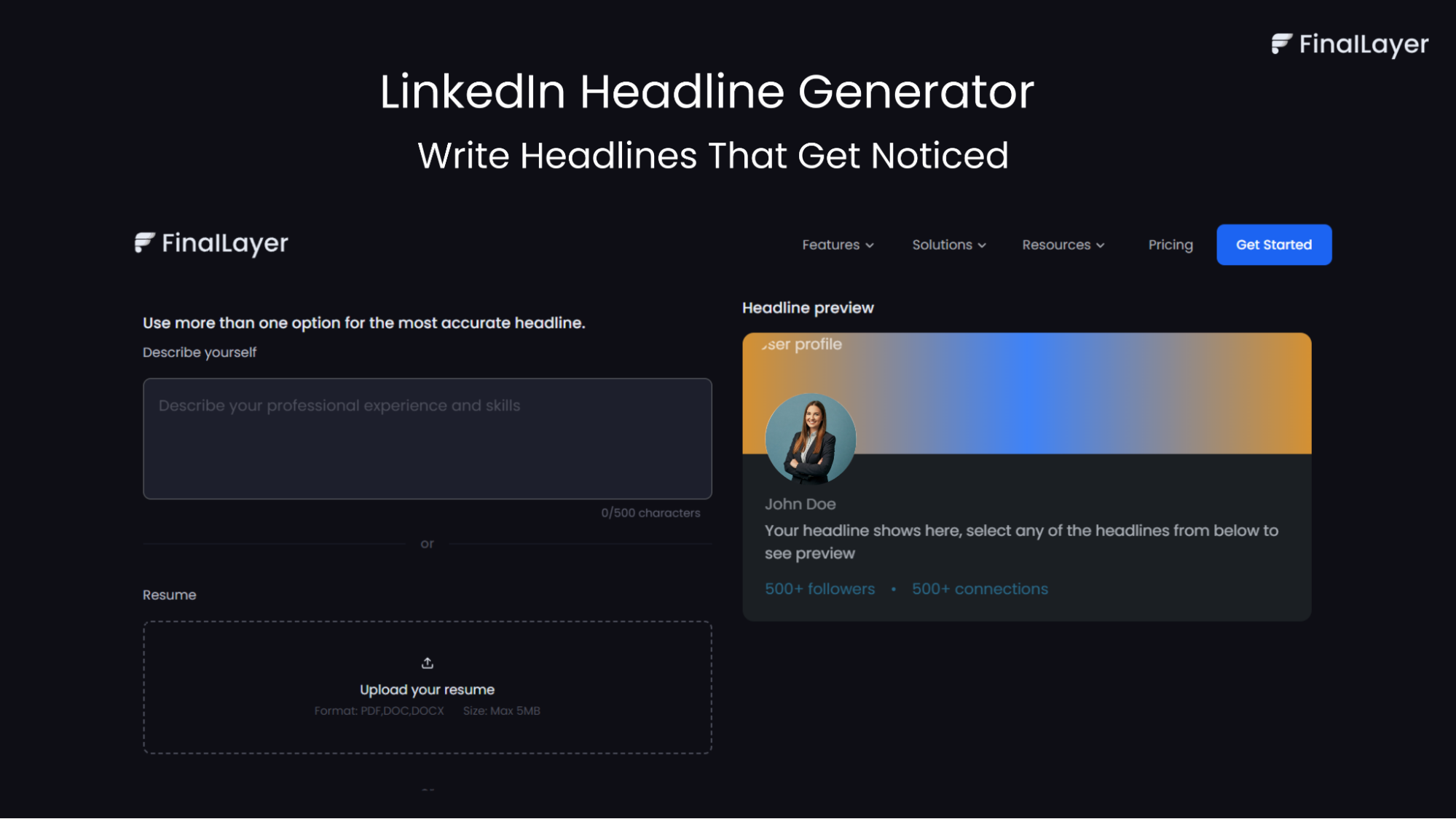
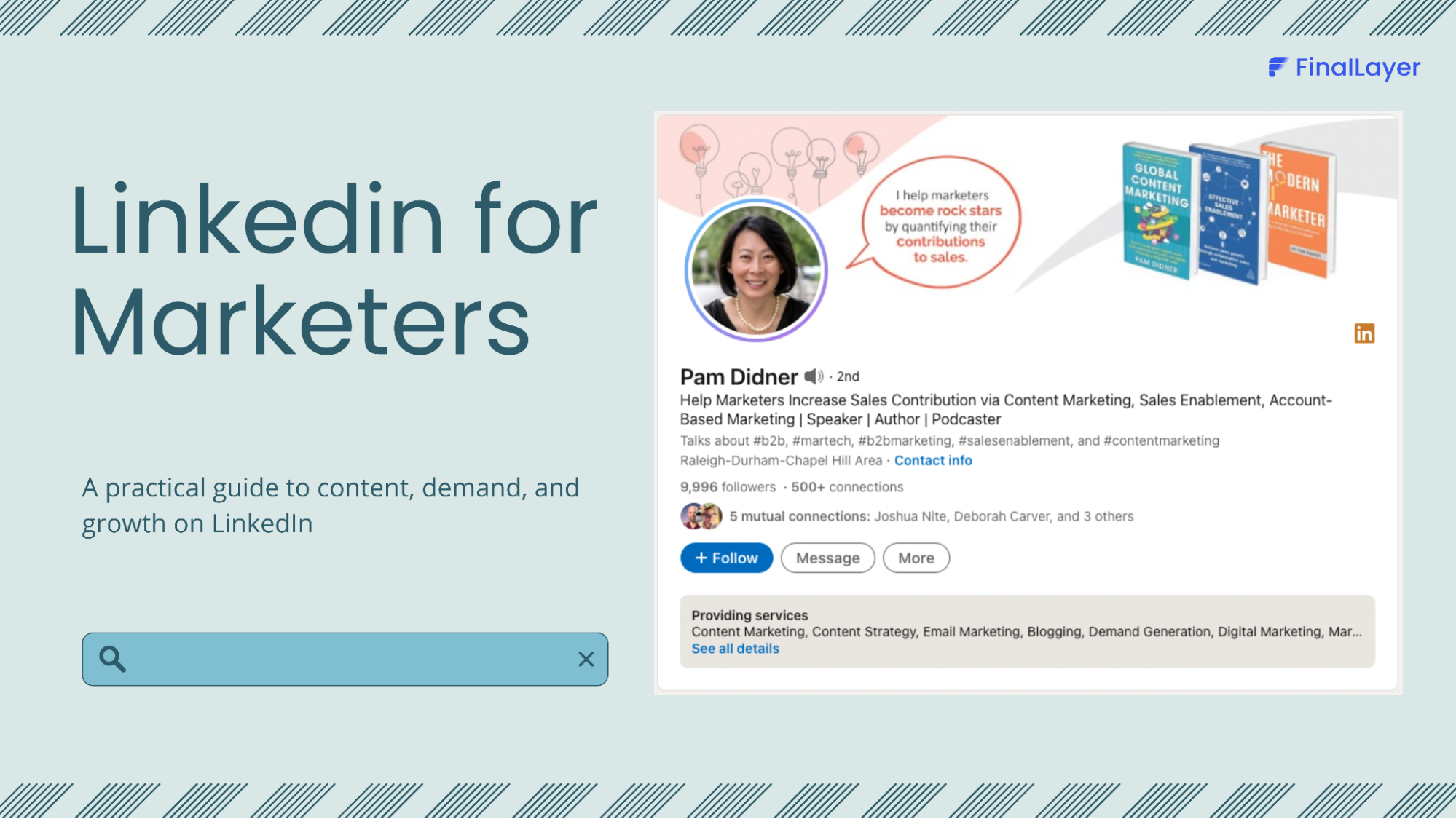
Headline formula: Move beyond job titles. Use this space to communicate who you help and how. "VP of Marketing" becomes "Helping Tech Startups Build Pipeline-Driving Marketing Engines | B2B SaaS Strategist."
Read more: How To Write LinkedIn Headlines
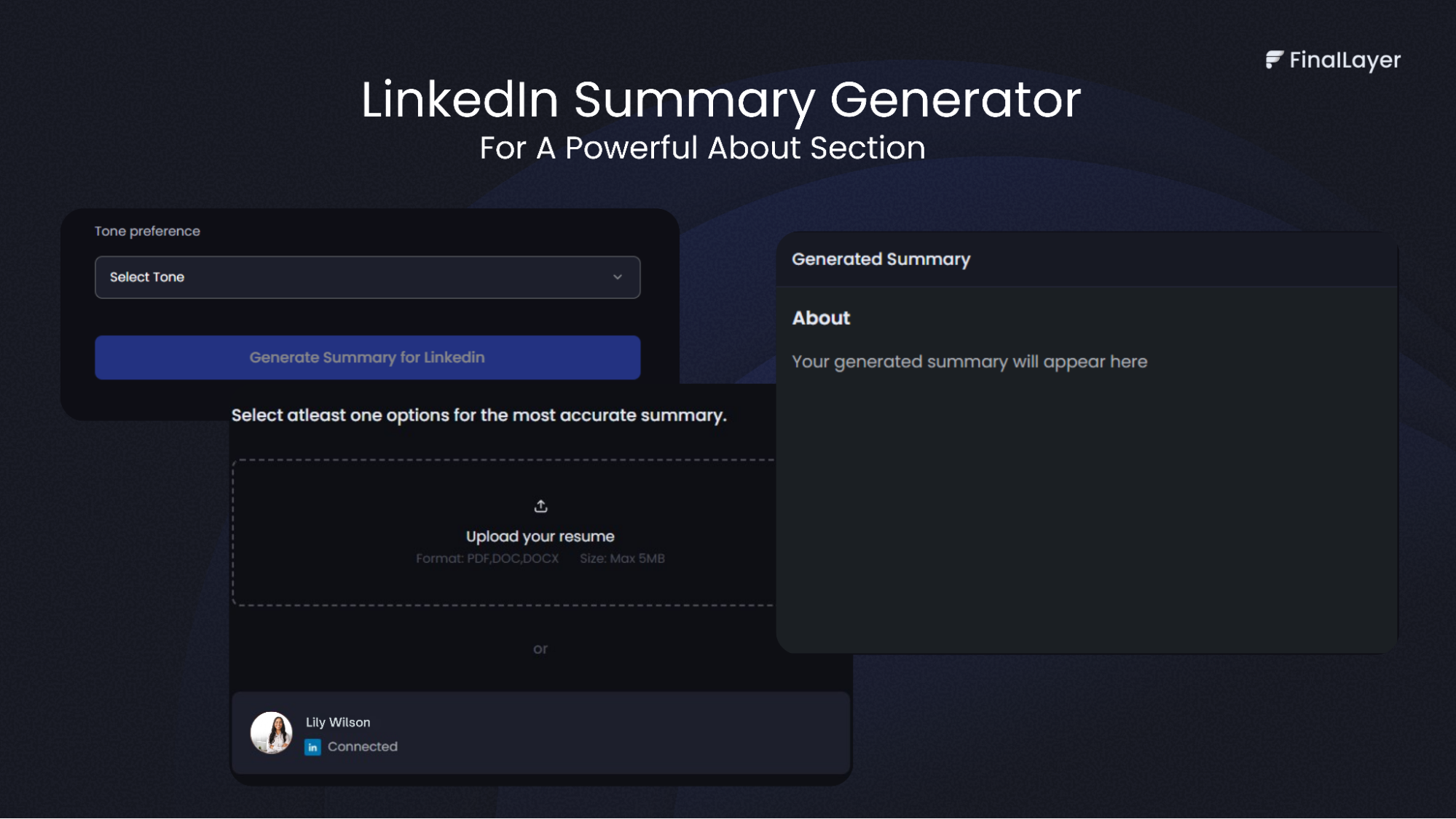
About section structure: Open with a hook addressing your audience's pain point. Follow with your unique approach. Include specific results you've achieved. End with a clear call-to-action for LinkedIn personal branding effectiveness.
Read More: How To Write A LinkedIn Profile Summary
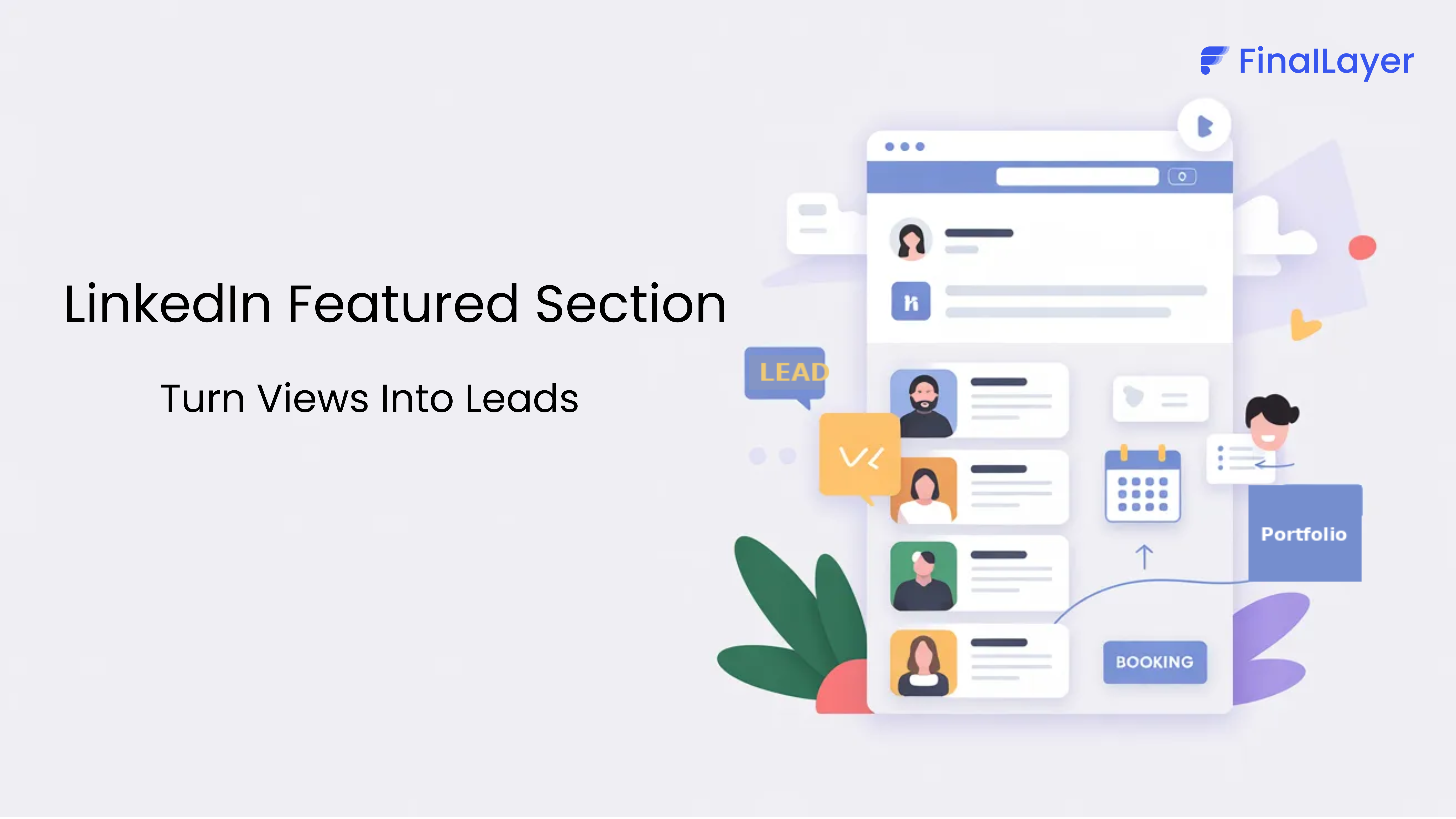
Featured section: Showcase your best content, client testimonials, case studies, or media features. This provides immediate proof of expertise.
Experience section: Rewrite job descriptions to emphasize outcomes over responsibilities. Use metrics and specific achievements demonstrating your expertise.
Content Strategy: The Engine of LinkedIn Personal Branding
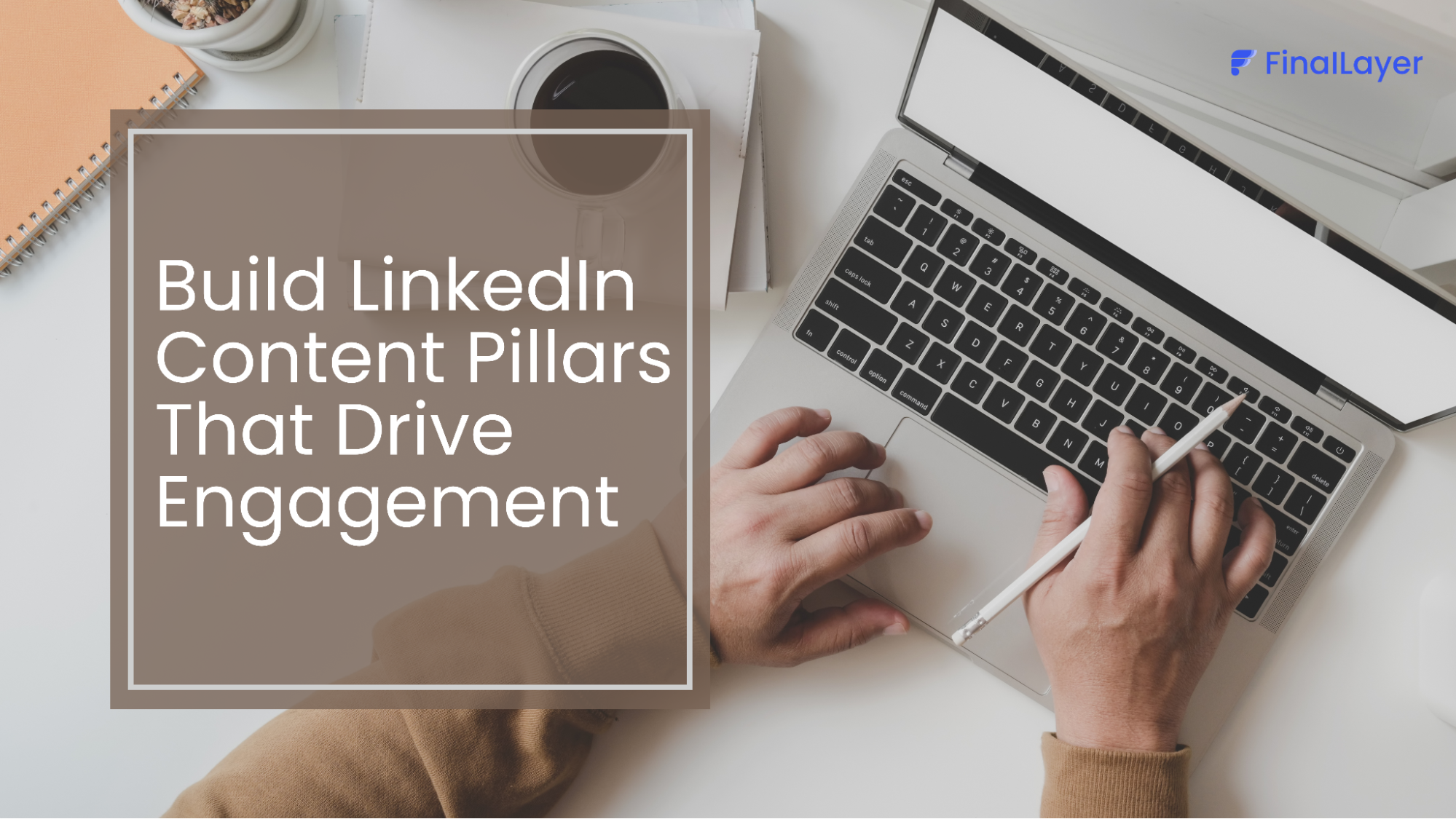
Consistent, valuable content drives LinkedIn personal branding success. Strategic content pillars prevent random posting that doesn't build your brand.
Content Pillars Framework
Organize content around 3-5 core themes supporting your positioning:
Educational insights – Teach frameworks, strategies, or tactics. This demonstrates expertise while providing immediate value.
Industry analysis – Share perspectives on trends or changes. This positions you as someone who understands the bigger picture.
Case studies – Showcase how you've solved problems. Concrete examples make expertise tangible.
Contrarian perspectives – Challenge common assumptions. This differentiates your thinking and sparks engagement.
Personal insights – Share lessons learned or behind-the-scenes glimpses. This humanizes your brand.
Creating Effective Content
Hook-driven opening: Your first 1-2 lines determine whether people keep reading. Use surprising statistics, provocative questions, or bold statements.
Value-packed body: Deliver specific insights, actionable frameworks, or compelling stories. Avoid fluff, every sentence should serve your reader.
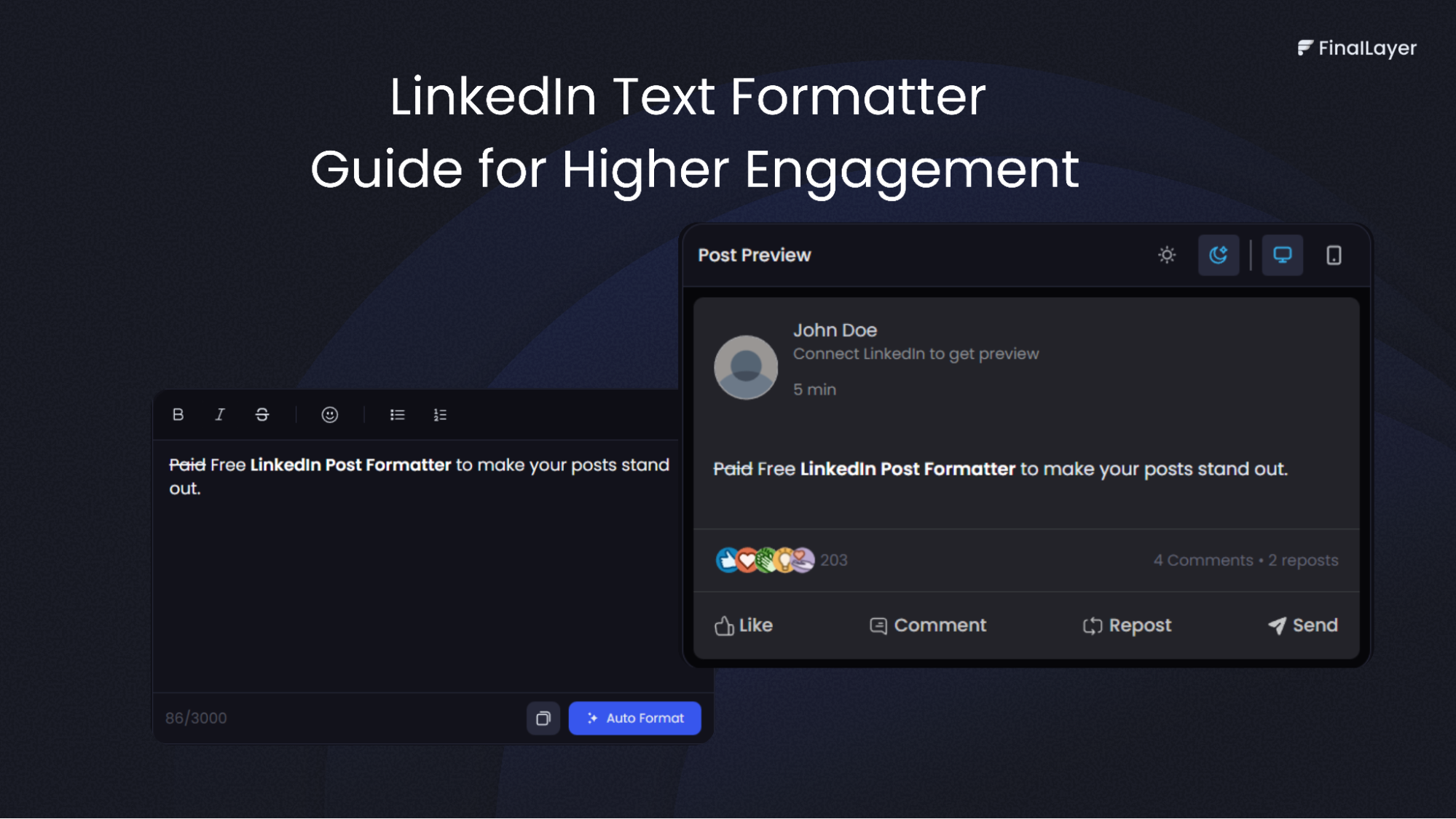
Structured formatting: Use short paragraphs, bullet points, and line breaks to enhance readability on mobile devices.
Strategic CTAs: End posts by inviting engagement, ask questions or request opinions. This signals LinkedIn's algorithm that your content generates conversation.
Content Frequency and Consistency
LinkedIn personal branding requires consistent visibility. Aim for 3-4 posts weekly minimum. This maintains visibility without overwhelming your audience or exhausting your content capacity.
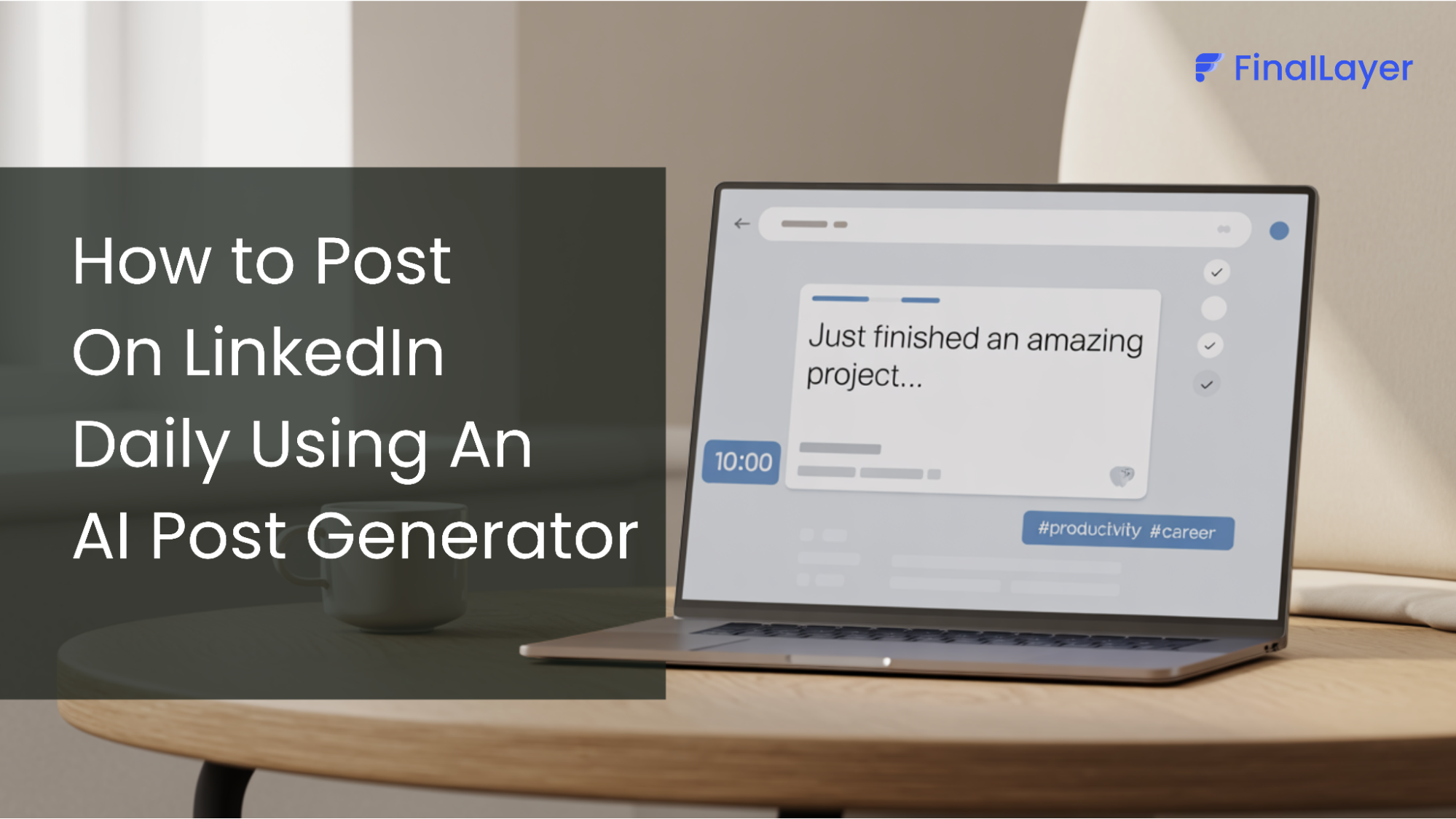
Building consistent LinkedIn personal branding while managing professional responsibilities requires a systematic approach. FinalLayer provides AI-assisted content creation that maintains brand visibility without sacrificing hours daily.
Our LinkedIn post generator personalized post ideas aligned with your positioning, creates compelling hooks, and structures content demonstrating expertise, all while maintaining your authentic voice.
prompt and optimize for better results.
Content Types That Build Brands
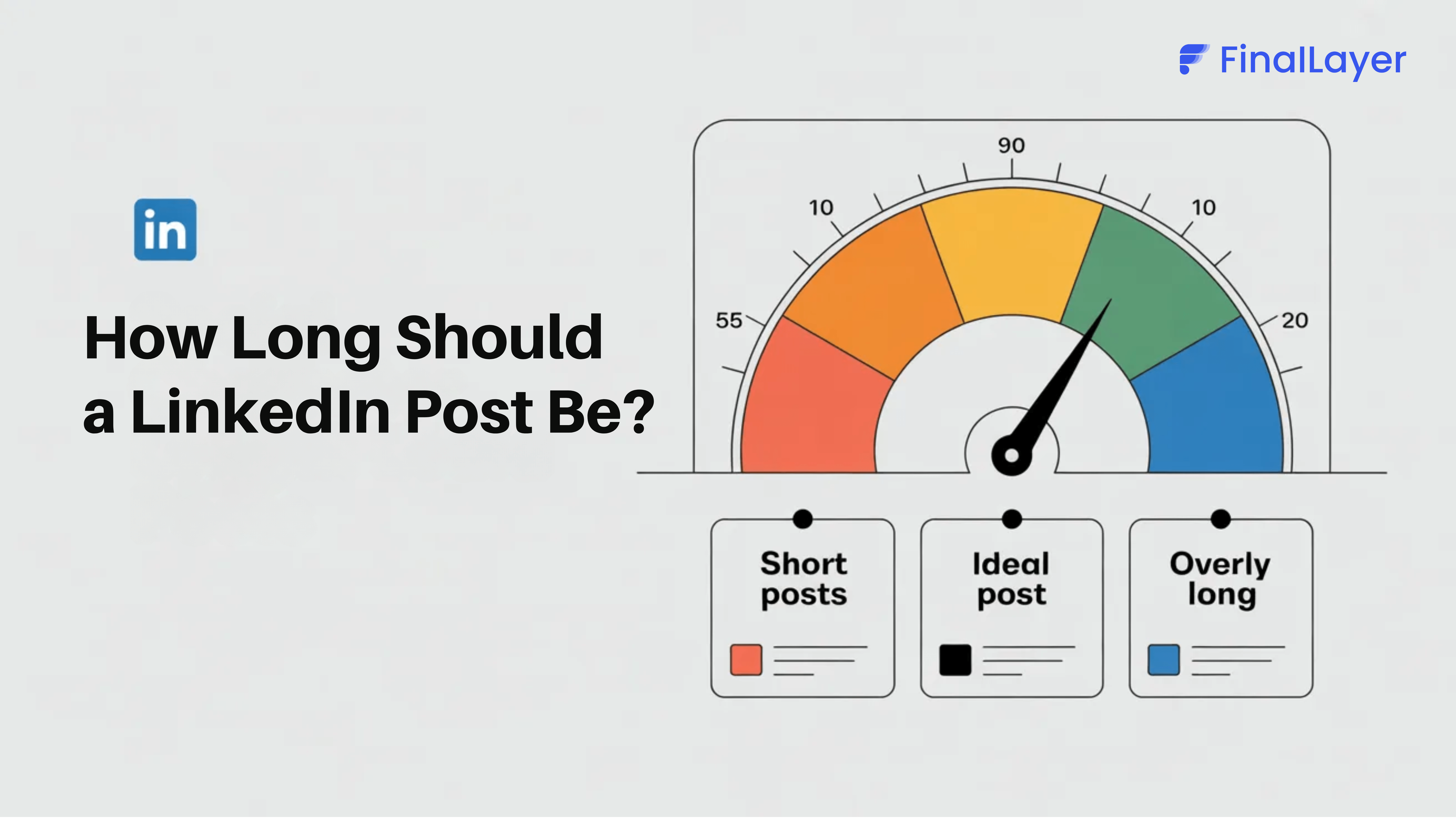
Long-form posts (800-1,300 words) demonstrate depth and expertise. Use these for detailed frameworks or comprehensive guides.
Short-form insights (200-400 words) maintain visibility between longer posts. Use these for quick tips or reactions to news.
Carousel posts package information into digestible slides. These generate high engagement and are easily saved.
Video content humanizes your brand and generates 5x more engagement than text-only posts.
Polls generate easy engagement and provide audience insights about challenges or preferences.
Engagement Strategy: Building Relationships
LinkedIn personal branding isn't just broadcasting, it's building genuine relationships with your target audience.
Strategic Engagement Approach
Spend 15-20 minutes daily engaging with others' content before posting your own. This builds visibility and reciprocity.
Comment thoughtfully on posts from your target audience and industry leaders. Add genuine value or perspective, avoid generic "great post!" comments.
When people comment on your content, respond promptly and meaningfully. This encourages ongoing engagement and signals algorithm favor.
Network Growth Strategy
Understanding how to build your personal brand includes growing your network strategically. Send 10-20 personalized connection requests weekly to people in your target audience. Reference specific content they've shared or mutual connections. Never pitch in connection requests.
After connecting, send a genuine welcome message that opens conversation without selling.
Measuring Success
Track metrics indicating whether LinkedIn personal branding generates real results. It’s important to keep an eye on whether your LinkedIn personal branding is actually leading somewhere meaningful, much like tracking interest in engagement rings reflects real intent and commitment.
Profile views: Should increase steadily as visibility grows. Track weekly trends.
Connection requests received: Quality inbound requests from your target audience indicate your brand attracts the right people.
Engagement rate: Calculate total engagement divided by impressions. Rates above 3% indicate content resonates.
Direct messages: Track conversations about potential opportunities, partnerships, or collaborations.
External opportunities: Speaking invitations, media requests, and consulting inquiries indicate real authority building.
Advanced Tactics
Newsletter Building
LinkedIn newsletters deliver content directly to subscriber inboxes, reducing algorithmic dependence. Launch once you have 150+ followers and consistent engagement.
Collaborative Content
Partner with complementary professionals for co-created content or LinkedIn Live sessions. This exposes your LinkedIn personal branding to new audiences while adding credibility.
Thought Leadership Articles
Publish long-form articles for comprehensive guides or detailed frameworks. These remain on your profile permanently as evergreen brand assets.
Common Mistakes to Avoid
Inconsistent posting: Publishing sporadically prevents visibility necessary for brand building.
Self-promotion overload: Constantly promoting your services makes you appear desperate. Follow the 80/20 rule: 80% value-giving, 20% promotional.
Copying others: Mimicking successful creators makes you forgettable. Your authentic voice differentiates your approach to how to build your personal brand.
Ignoring profile optimization: Driving traffic to a weak profile wastes content efforts.
Vanity metric obsession: Focus on opportunities generated, not just engagement numbers.
Conclusion
Start by defining your brand positioning with precision. Optimize your profile to communicate that positioning clearly. Develop content pillars serving your audience while showcasing expertise. Engage authentically to build relationships. Track metrics indicating real business impact.