You spend 30 minutes crafting the perfect LinkedIn post. Your insights are valuable, your examples are specific, and your call-to-action is clear. You hit publish, check back an hour later, and find three polite likes from people who definitely didn't read past the first sentence.
The problem isn't your content. It's your hook. In the LinkedIn post format, the first two lines are the only guaranteed real estate you get before users decide whether to click "see more" or keep scrolling. If those opening lines don't stop the scroll, nothing else in your post matters, no matter how brilliant your insights might be.
Understanding how to write LinkedIn posts that actually get read starts with mastering the hook. This isn't about clickbait or manipulation. It's about respecting your audience's attention and making an immediate case for why they should invest 60 seconds in reading what you have to say.
Why LinkedIn Hooks Control Everything
The LinkedIn algorithm doesn't read your entire post to determine its quality. It watches what users do in the first few seconds after seeing your content. Those initial reactions, whether people click to read more, scroll past immediately, or engage with your post, signal to the algorithm whether your content deserves broader distribution.
Here's the critical sequence:
- Your post appears in someone's feed with only the first 1-2 lines visible
- They read those lines in 2-3 seconds and decide: click "see more" or keep scrolling
- If enough people click to read more and then engage, the algorithm interprets this as valuable content
- The algorithm shows your post to more people, creating a positive feedback loop
- If most people scroll past, the algorithm suppresses your post's reach immediately
This means your LinkedIn engagement isn't primarily determined by the quality of your full post; it's determined by the quality of your LinkedIn hooks. The best content in the world gets zero engagement if the opening lines fail to create curiosity or promise value.
8 Proven Hook Frameworks for LinkedIn Posts
When learning how to write LinkedIn posts that perform, having tested frameworks removes the guesswork. Here are eight approaches that consistently improve LinkedIn engagement:
Framework 1: The Contrarian Statement
Structure: Make a bold claim that challenges conventional wisdom in your industry.
Example: "Stop trying to build your personal brand on LinkedIn. You're doing it backwards."
Why it works: People slow down when they see an opinion that contradicts what they believe or have been told. The desire to understand why you think differently compels them to click "see more."
When to use: When you have a genuinely different perspective on common advice or practices in your field.
Framework 2: The Unexpected Number
Structure: Open with a surprising statistic or data point that seems too extreme to be true.
Example: "I spent $47,000 learning this lesson. You can learn it in 3 minutes."
Why it works: Numbers create specificity and credibility. Extreme numbers (very high or very low) trigger curiosity about the story behind them.
When to use: When you have concrete data, personal experience with measurable outcomes, or industry statistics that surprise people.
Framework 3: The Dramatic Moment
Structure: Drop your audience into the middle of a significant moment without context.
Example: "The client hung up mid-sentence. I knew we'd lost the $200K deal."
Why it works: Starting in the middle of the action creates immediate tension. Humans are wired to want resolution to incomplete stories, making this one of the most effective LinkedIn hooks for narrative content.
When to use: When sharing lessons from specific experiences, case studies, or personal professional stories.
Framework 4: The Uncomfortable Truth
Structure: State something everyone knows but rarely says publicly in your industry.
Example: "Most LinkedIn advice is recycled garbage. Including this post. Let me explain."
Why it works: These LinkedIn opening lines work because they validate what your audience privately thinks but doesn't see acknowledged publicly. This creates instant credibility and connection.
When to use: When addressing industry problems, challenging the status quo, or discussing topics with a lot of superficial advice floating around.
Framework 5: The Time-Bound Transformation
Structure: Highlight a significant change over a specific timeframe.
Example: "3 months ago, I had 847 followers and zero engagement. Today I broke 50,000 followers. Here's what changed."
Why it works: Transformation stories trigger both curiosity (how did you do it?) and aspiration (I want that result). Specific timeframes and numbers make the transformation feel real and achievable.
When to use: When sharing results, lessons from growth periods, or documenting significant changes in your professional journey.
Framework 6: The Question That Everyone's Asking
Structure: Lead with the exact question your audience is already thinking about.
Example: "How do people with 500 connections get 10,000 views per post? I asked 47 of them. Here's what they all do."
Why it works: When your LinkedIn hooks articulate what people are already wondering, they immediately feel understood. The promise of answers from direct research adds credibility.
When to use: When you have insights into common questions or have conducted research on frequently discussed topics.
Framework 7: The Mini Case Study Preview
Structure: Tease a specific result or outcome you're about to explain.
Example: "Client went from 12 qualified leads per month to 127. Same budget. Same team. One change."
Why it works: Concrete results create curiosity about the method. The simplicity of "one change" makes the solution feel accessible rather than overwhelming.
When to use: When sharing tactical advice, explaining a methodology, or discussing case studies with clear before-and-after metrics.
Framework 8: The Unpopular Opinion
Structure: Signal that you're about to share a perspective most people disagree with.
Example: "Unpopular opinion: Your competition isn't your biggest problem. Your positioning is. Here's why."
Why it works: The "unpopular opinion" signal primes people to evaluate whether they agree or disagree, creating mental engagement before they even read your actual argument.
When to use: When you have a well-reasoned perspective that differs from mainstream advice in your industry.
How to Write LinkedIn Posts: Building Beyond the Hook
Strong LinkedIn hooks get people to click "see more," but the rest of your LinkedIn post format needs to deliver on the promise your opening lines made. Here's how the complete structure should flow:
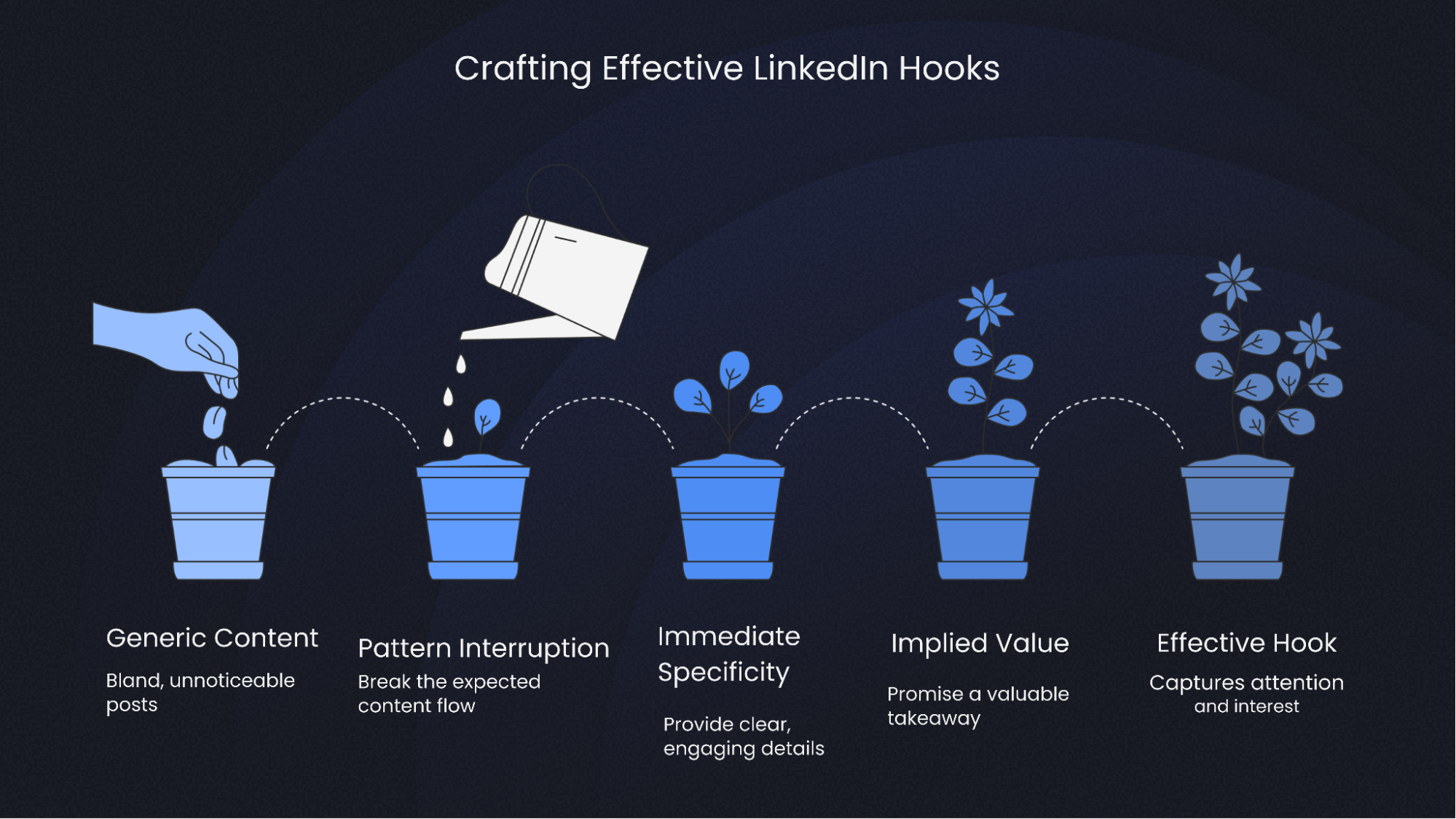
Lines 1-2: The Hook - Create curiosity, pattern interruption, or immediate value promise
Lines 3-5: Context or Setup - Provide just enough background so your audience understands what you're discussing and why it matters
Middle Section: Value Delivery - Share your insights, story, data, or framework. This is where you fulfill the promise your hook made
Final Section: Takeaway + CTA - Distill the main point into a memorable conclusion and invite engagement through a question or call-to-action
This LinkedIn post format ensures that people who click past your hook stay engaged through the entire post, which signals quality to the algorithm and improves your overall LinkedIn engagement.
Common Hook Mistakes That Kill LinkedIn Engagement
Even when you understand how to write LinkedIn posts with strong opening lines, certain mistakes can undermine your efforts:
Starting With Context Instead of Impact
Weak opening: "I've been thinking a lot about leadership lately, and I wanted to share some thoughts that might be helpful."
Strong alternative: "The best leaders I know break this rule constantly: never show weakness."
Context can come after you've earned attention with your hook. Leading with setup kills LinkedIn engagement because it fails to give people a reason to keep reading.
Burying the Interesting Part
Many professionals put their most compelling insight in the middle or at the end of their posts. By the time readers get there, most have already scrolled away. Identify the most interesting, surprising, or valuable element of your content and put it in your LinkedIn opening lines.
Using Generic Professional Language
Weak opening: "I'm excited to share some insights about digital transformation."
Strong alternative: "Your digital transformation will fail. 73% do. Here's why."
Generic language is invisible on LinkedIn. Your LinkedIn hooks need to be specific, direct, and ideally somewhat provocative to stand out in a feed full of polished corporate speak.
Making Promises You Don't Keep
If your LinkedIn opening lines promise a specific insight, framework, or story, your full post must deliver exactly that. Breaking this trust once means fewer people will click "see more" on your future posts. The algorithm also notices when people quickly leave after clicking to read more, interpreting this as low-quality content.
A/B Test Similar Posts
Try posting similar content with different LinkedIn hooks spaced a few weeks apart. This isn't about reposting the same content; it's about seeing how different opening lines affect engagement on similar topics. The differences can be dramatic.
Making Hook Writing Sustainable
Creating effective LinkedIn opening lines every time you post can feel exhausting. Here's how to make it sustainable:
Build a swipe file - Save LinkedIn hooks that make you stop scrolling, both from your posts and others. Analyze what made them effective and adapt the patterns to your content.
Batch your hook writing - When creating multiple posts, write all your hooks in one focused session. This helps you get into the right creative headspace and maintains quality without scattered effort.
Use AI assistance strategically - AI tools can help generate multiple hook options based on your content, giving you variations to refine rather than starting from a blank page. The key is personalizing AI-generated hooks to match your voice and ensure they accurately represent your content.
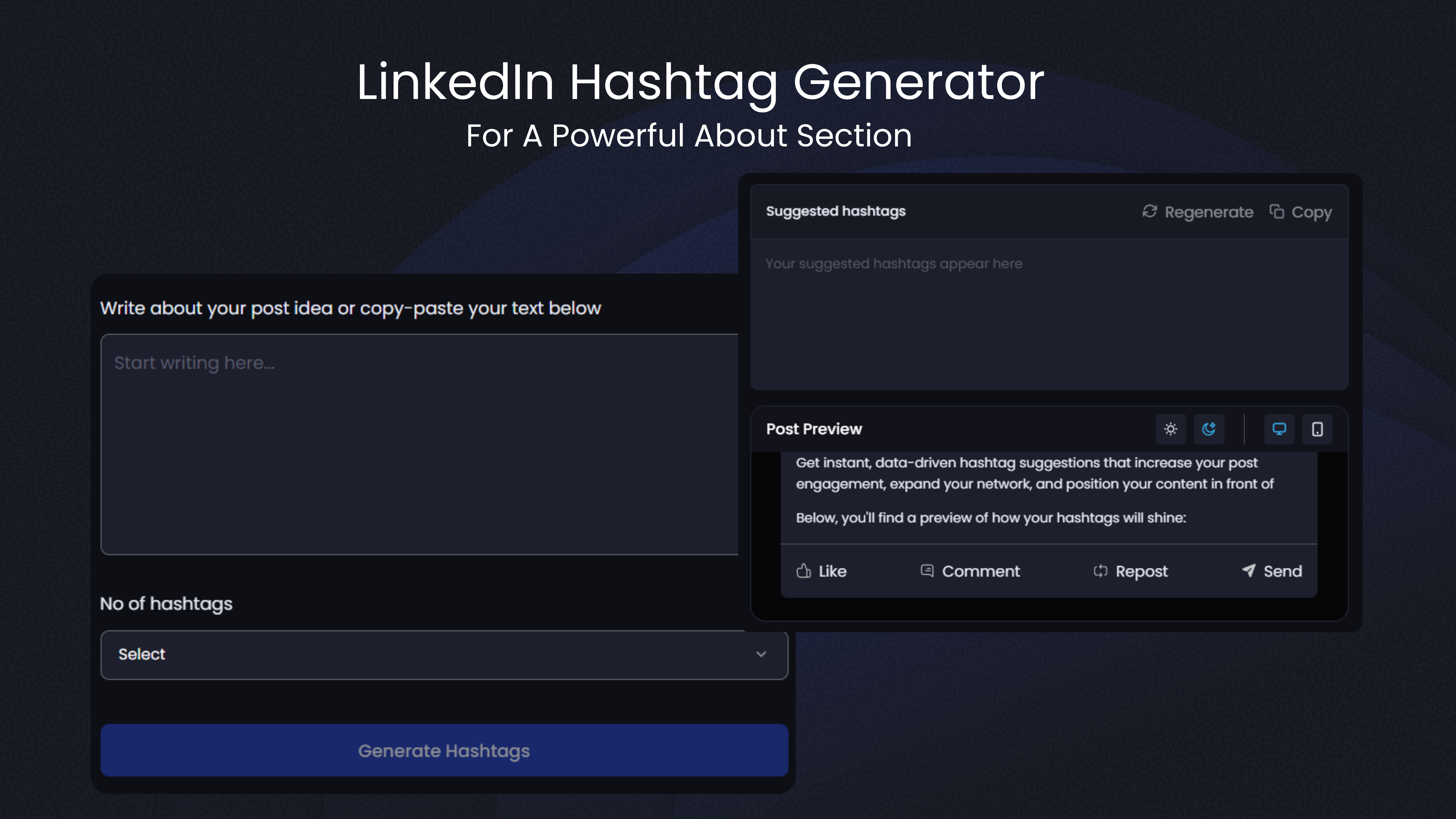
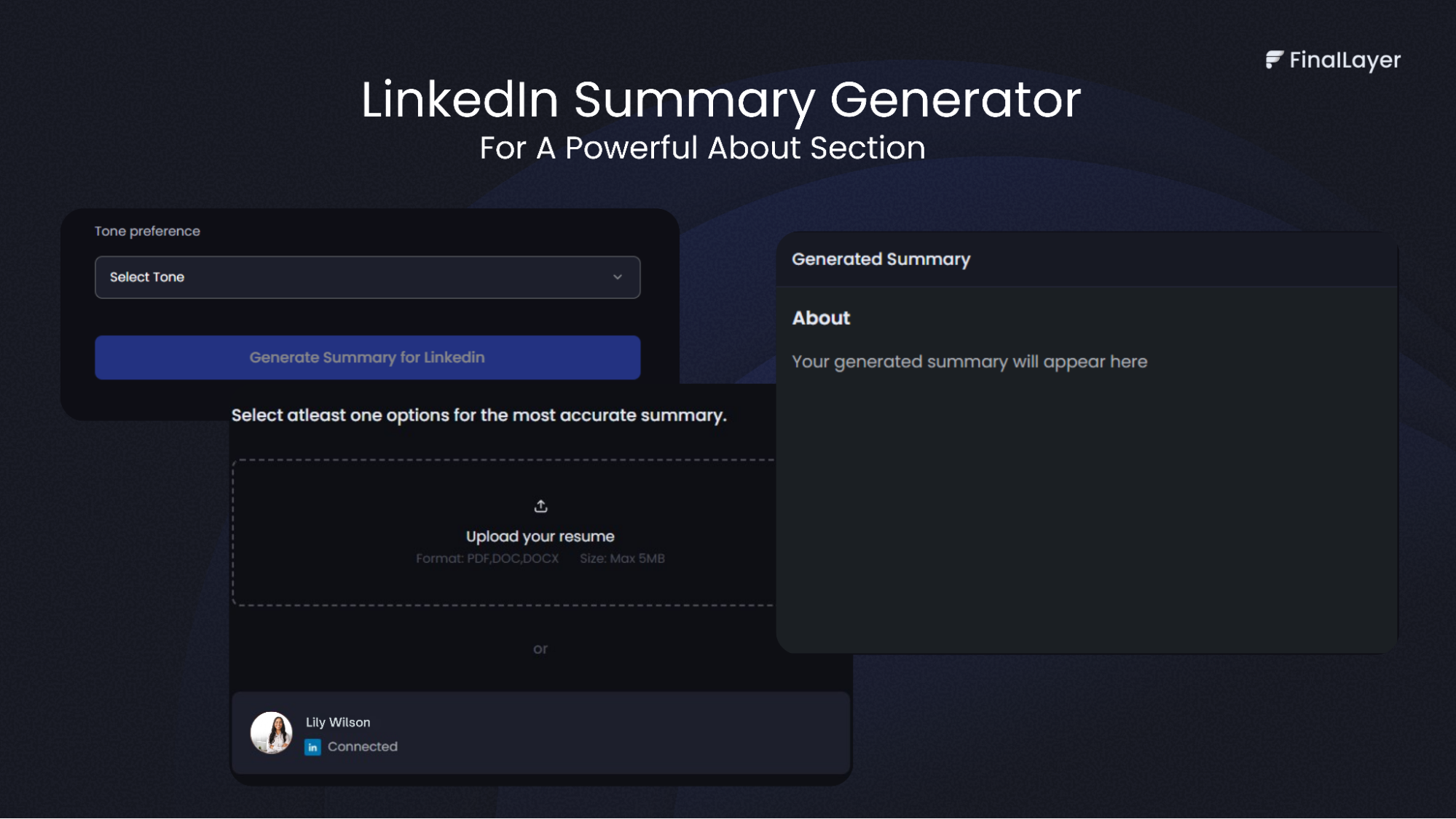
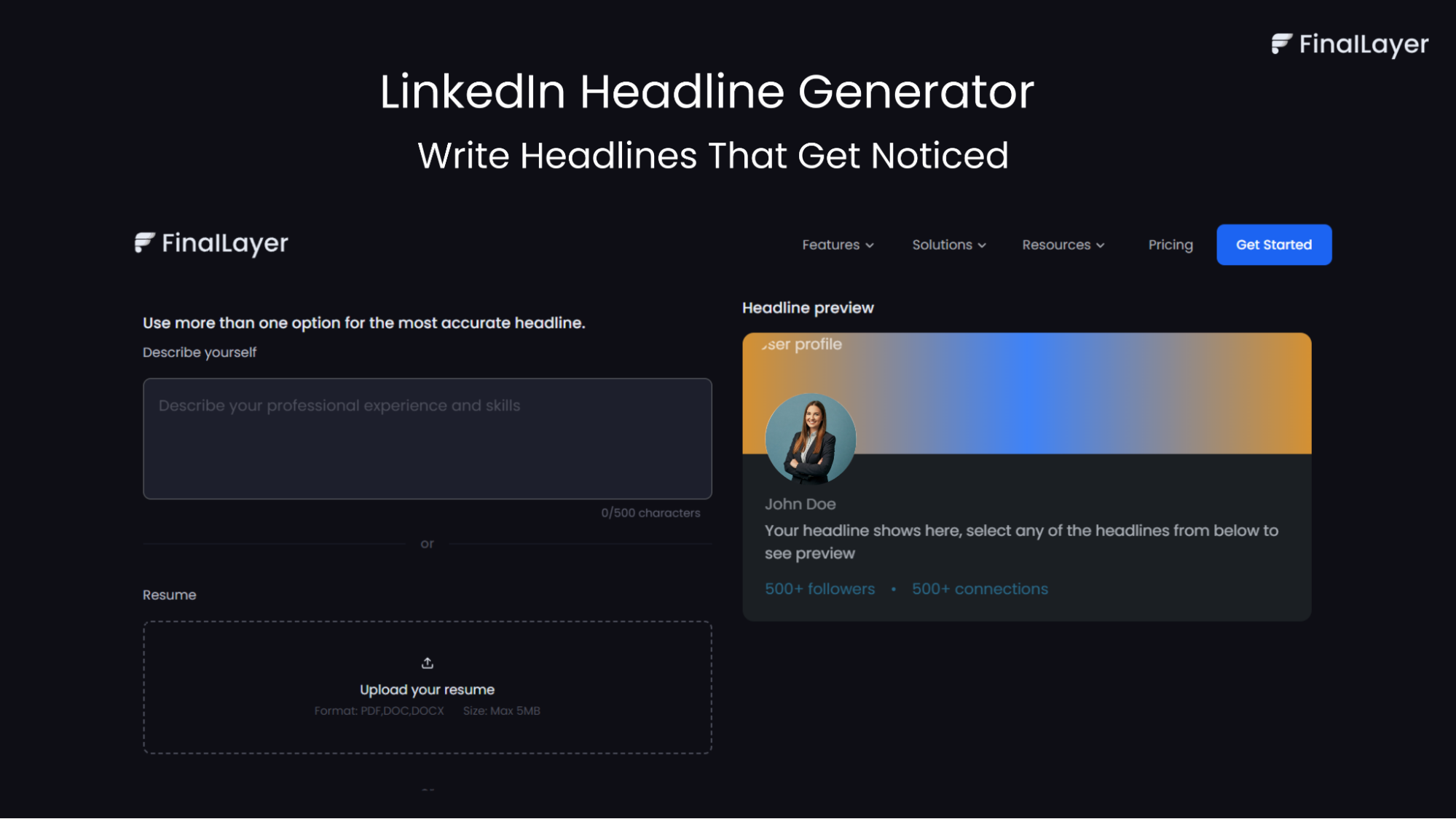
Final Layer makes this even easier by generating multiple hook variations based on your topic, tone, and target audience. It also helps you refine the opening lines, build stronger angles, and turn them into complete posts ready to publish. With Final Layer, you’re never starting from a blank page.
prompt and optimize for better results.
Create templates - Develop your own hook templates based on what works for your audience. Having 5-7 proven structures makes each new post easier to start.
Final Thoughts
The LinkedIn post format rewards those who respect the reality of how users consume content in their feeds. Your audience scrolls quickly, their attention is limited, and they're constantly evaluating whether your content deserves their time. Strong LinkedIn hooks aren't about tricking people; they're about immediately demonstrating that you have something worth reading. Master your opening lines, and everything else about how to write LinkedIn posts becomes significantly easier.