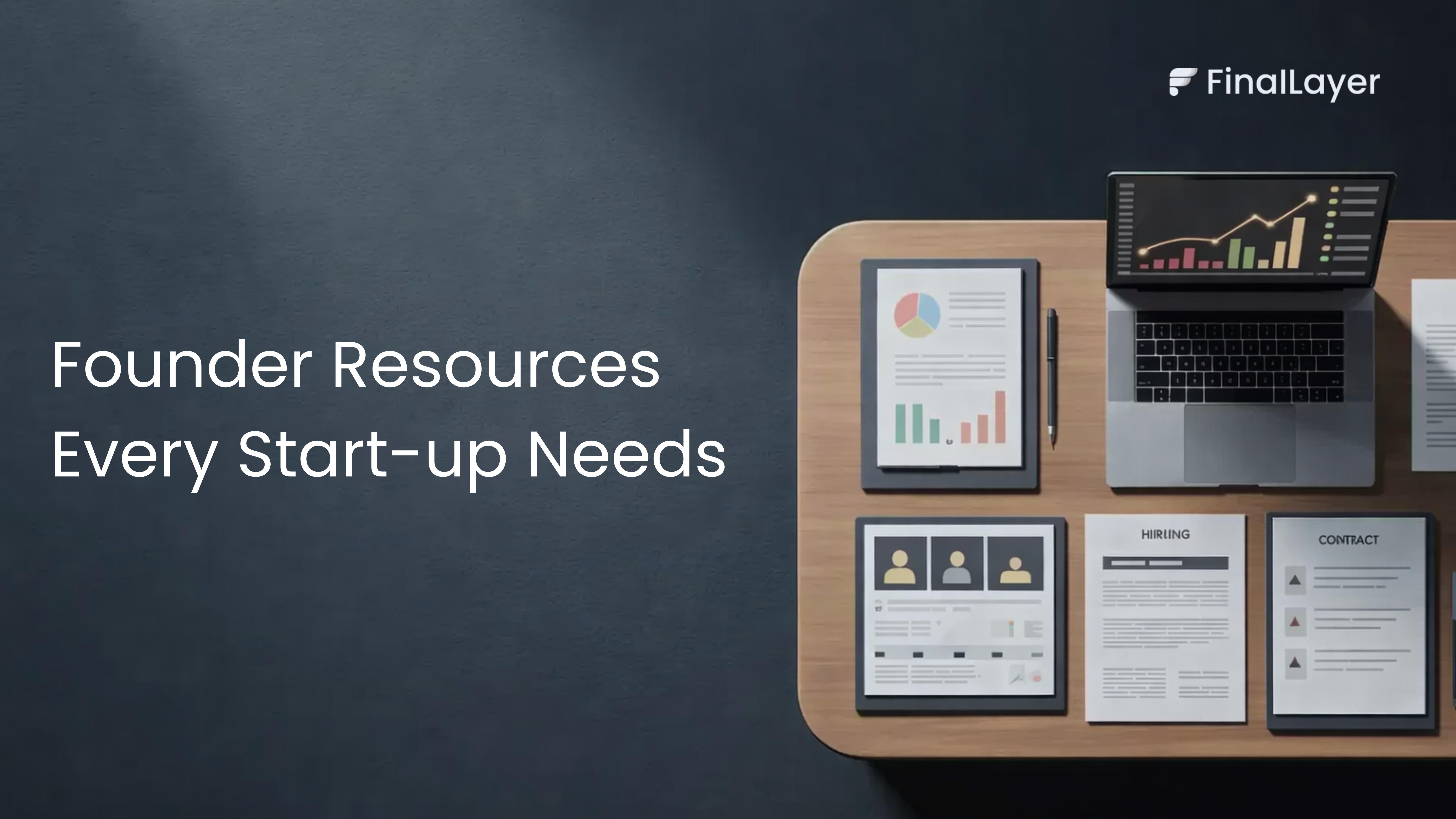
Starting a company is overwhelming. Between building your product, finding customers, managing a team, and fundraising, founders face dozens of critical tasks simultaneously, most of which they're doing for the first time.
The difference between founders who scale efficiently and those who burn out often comes down to access to the right startup resources at the right time.
You don't need to figure everything out from scratch. The templates and guides that successful founders use are available, you just need to know which ones actually matter.
This guide breaks down the essential founder resources every entrepreneur should have, organized by the areas that matter most for growth.
Why Quality Resources Matter
Having the right tools is critical for startup success.
Time is Your Scarcest Resource
Every hour you spend creating documents from scratch is an hour you're not spending on product, customers, or strategy. Quality templates give you back that time.
Avoid Expensive Mistakes
Many founders learn through costly mistakes that could have been avoided. A proper contractor agreement prevents legal disputes. A solid financial model catches runway problems before they become critical.
Professional Credibility
When raising money, hiring talent, or pitching clients, professionalism matters. Quality documents ensure your presentations and communications look polished.
Essential Founder Resources: Templates That Save Time
Templates are the foundation of effective startup resources. They give you proven structures you can customize rather than building from scratch.
Business Plan Templates
A comprehensive business plan template covers your vision, market analysis, competitive landscape, financial projections, and growth strategy. While you might not need a formal 40-page business plan for every situation, having the template ensures you've thought through all critical aspects of your business.
Quality business plan templates include:
Executive summary framework
Market analysis structure
Financial projection models
Risk assessment sections
Go-to-market strategy templates
Pitch Deck Templates
Your pitch deck is often your first impression with investors. Professional pitch deck templates provide the proven structure VCs expect: problem, solution, market size, business model, traction, team, ask.
The best startup resources for pitch decks include multiple formats, investor decks, demo day decks, and partnership decks, each optimized for different audiences.
Financial Model Templates
Financial models are critical founder resources that many entrepreneurs struggle with. A good template helps you project revenue, expenses, runway, and key metrics. Look for models that include:
Three-statement financial projections
Unit economics calculators
Runway and burn rate tracking
Scenario planning tools
Startup Resources for Operations and Workflow
Once you're building, operational startup resources keep your company running smoothly.
Standard Operating Procedures (SOPs)
SOPs document how critical tasks get done in your company. These founder resources ensure consistency, enable delegation, and preserve institutional knowledge as you scale.
Essential SOPs to develop early:
Customer onboarding workflows
Product development processes
Quality control procedures
Crisis management protocols
Meeting Templates and Agendas
Structured meetings save time and drive results. Meeting templates ensure every gathering has clear objectives, agendas, and follow-up actions.
Founder resources for meetings should cover:
All-hands meeting structures
Board meeting agendas
One-on-one templates
Sprint planning formats
Project Management Frameworks
Project tracking templates help you manage multiple initiatives without things falling through the cracks. Look for startup resources that include:
Project roadmap templates
Sprint planning documents
Task prioritization frameworks
Progress tracking systems
Founder Resources for Hiring and Team Building
Your team makes or breaks your startup. HR and hiring founder resources set you up for success.
Job Description Templates
Well-written job descriptions attract better candidates. Job description templates should cover role responsibilities, required skills, company culture, and growth opportunities. Quality startup resources include templates for:
Technical roles (engineering, product, design)
Business roles (sales, marketing, operations)
Leadership positions
Contractor and freelance roles
Interview Guides and Scorecards
Structured interviews lead to better hiring decisions. Interview guides ensure consistency across candidates while scorecards provide objective evaluation frameworks.
Essential hiring founder resources include:
Interview question banks by role
Skills assessment templates
Culture fit evaluation frameworks
Reference check guides
Offer Letter and Contract Templates
Offer letters and employment contracts need to be clear, comprehensive, and legally sound. These startup resources should cover compensation, equity, benefits, IP assignment, and termination clauses.
Startup Resources for Marketing and Growth
Marketing founder resources help you acquire customers efficiently and build brand awareness.
Content Calendar Templates
Consistent content drives growth. Content calendar templates help you plan blog posts, social media, email campaigns, and other marketing initiatives. Look for startup resources that include:
Monthly planning frameworks
Content type breakdowns
Distribution channel tracking
Performance metric spaces
Email Marketing Templates
Email remains one of the highest-ROI marketing channels. Email template collections should cover:
Welcome sequences for new users
Product announcement formats
Newsletter structures
Re-engagement campaigns
Cold outreach templates
Social Media Planning Resources
Social media founder resources help you maintain consistent presence across platforms. Templates should include posting schedules, content themes, and engagement strategies for LinkedIn, Twitter, and other relevant channels.
Founder Resources for Legal and Contracts
Legal founder resources protect your company and clarify relationships with partners, customers, and vendors.
Partnership Agreement Templates
If you have co-founders, a solid partnership agreement is non-negotiable. These startup resources should address equity splits, vesting schedules, decision-making authority, and exit scenarios.
Client and Vendor Contracts
Standard contract templates ensure you're protected in business relationships. Essential contract founder resources include:
Master service agreements
Statements of work
Non-disclosure agreements (NDAs)
Independent contractor agreements
Terms of Service and Privacy Policies
If you're building a digital product, legal compliance documents are critical startup resources. Templates should cover user rights, liability limitations, data handling, and regulatory compliance.
Startup Resources for Fundraising
Raising capital requires specific founder resources that help you find and close investors.
Investor Outreach Templates
Cold and warm email templates help you reach potential investors effectively. Quality startup resources include:
Introduction request formats
Direct investor outreach emails
Follow-up sequences
Update email templates for existing investors
Cap Table and Equity Management
Cap table templates help you track ownership, understand dilution, and model future funding rounds. These founder resources should include:
Current ownership tracking
Option pool management
Dilution scenario modeling
Pro forma cap tables for future rounds
Investor Update Templates
Regular investor updates build trust and keep stakeholders engaged. Update templates should cover metrics, wins, challenges, and how investors can help.
Case Studies and Learning Resources
Beyond templates, founder resources should include educational content that helps you make better decisions.
Startup Case Studies
Deep case studies show how other founders navigated similar challenges. Look for startup resources that break down:
Go-to-market strategies that worked
Pivot decisions and outcomes
Scaling challenges and solutions
Fundraising journeys with lessons learned
Founder Glossary and Terminology
Understanding startup terminology is crucial when talking to investors, lawyers, and advisors. A comprehensive glossary covering terms like ARR, MRR, burn rate, runway, dilution, and liquidation preferences is an essential founder resource.
How to Use Founder Resources Effectively
Having access to startup resources is only valuable if you use them correctly.
Customize, Don't Copy
Templates are starting points, not finished products. The best founder resources provide structure while allowing customization for your specific situation, industry, and goals.
Start With What You Need Now
Don't try to implement every startup resource at once. Focus on what you need for your current stage. Pre-revenue startups need pitch decks and financial models. Scaling companies need SOPs and hiring frameworks.
Update as You Grow
Founder resources aren't set-and-forget. Revisit templates quarterly as your company evolves. Your pitch deck at $100K ARR will look very different from your pitch deck at $1M ARR.
Share With Your Team
Startup resources are most valuable when your entire team uses them. Create a shared drive where everyone can access templates, ensuring consistency across your organization.
Where to Find Quality Founder Resources and Startup Resources
Not all resources are created equal. Here's what to look for in quality founder resources:
Ready-to-Use and Editable
The best startup resources are immediately usable. You should be able to download, open, and start customizing without complex setup.
Comprehensive Coverage
Rather than piecing together founder resources from dozens of sources, look for comprehensive libraries that cover all major areas: templates, operations, hiring, marketing, contracts, pitch decks, and fundraising.
Regularly Updated
Startup best practices evolve. Quality founder resources are maintained and updated to reflect current standards, legal requirements, and market expectations.
Free Access When Possible
Many of the best startup resources are available for free. Look for founders and platforms that make resources accessible without paywalls or complex gates.
FinalLayer's Founder Resources library provides exactly this: a curated collection of ready-to-use templates, documents, and guides covering every critical area from fundraising to operations to compliance. All resources are free, instantly downloadable, and designed specifically for founders building and scaling startups.
FinalLayer is an essential startup resource for founders building their personal brand on LinkedIn. Founder-led marketing drives growth, but most founders lack time for consistent content creation. FinalLayer's LinkedIn post generator creates personalized content matching your voice and expertise, establishing thought leadership without hours of writing.
prompt and optimize for better results.
Our platform learns your style, suggests industry-relevant topics, and generates posts positioning you as an authority. Live Research adds credible data to your posts, while AI Video Search finds relevant clips to boost engagement. Smart scheduling and the Community feed make consistent LinkedIn presence achievable while you're juggling product development and fundraising. Founder-led content drives inbound interest from investors, customers, and talent.
The Bottom Line on Founder Resources
Building a startup is challenging enough without recreating every process from scratch. The founders who scale efficiently leverage proven templates and frameworks, saving hundreds of hours for product and customers. Access what you need, customize it for your situation, and focus your energy on the work only you can do: building something people want.
Ready to access comprehensive founder resources and startup resources? Visit FinalLayer's Founder Resources library and download the templates, guides, and documents you need to build and scale your startup effectively.