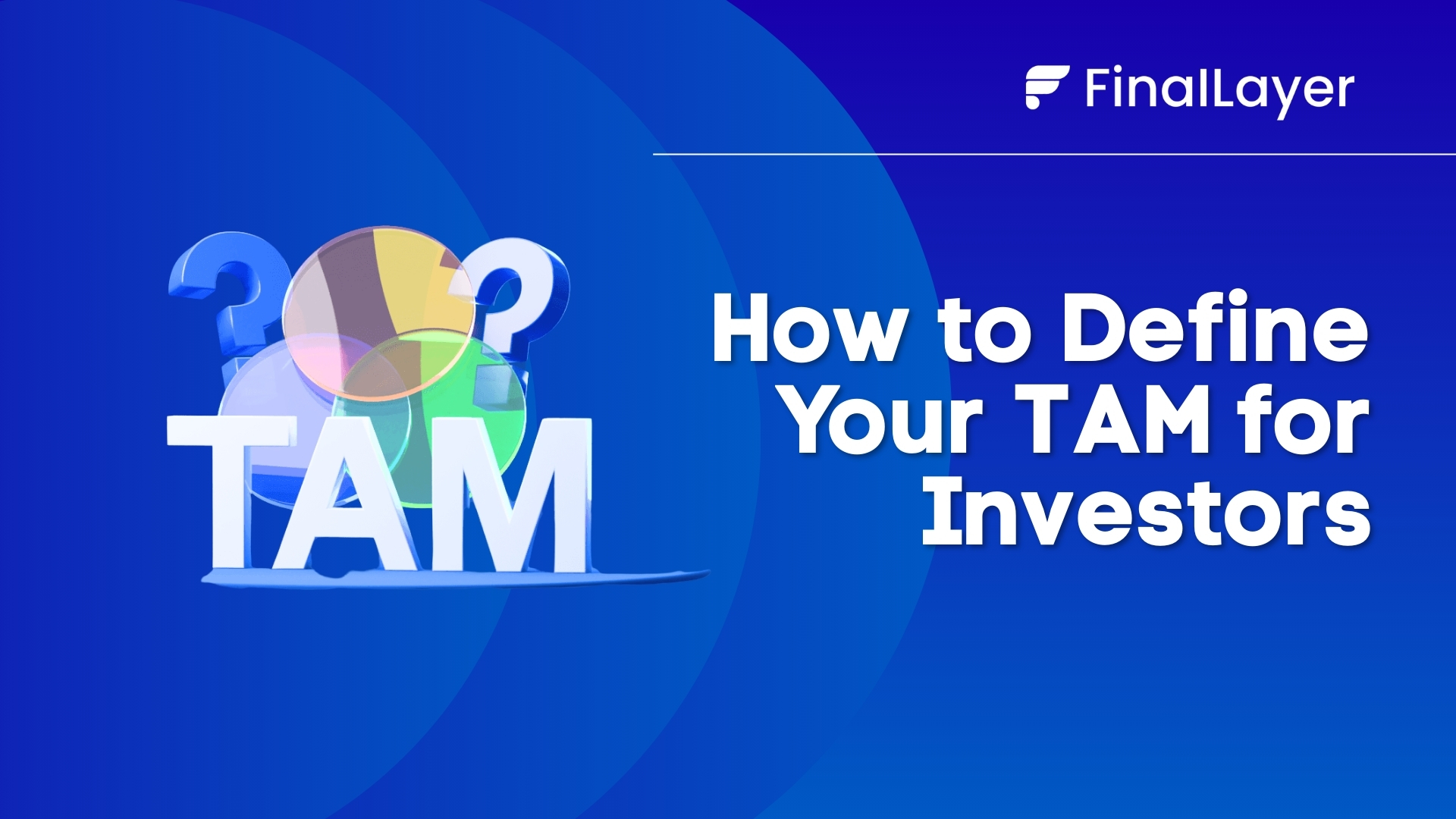
When investors ask what your TAM is, how do you define it? It's very tricky. I've raised eight rounds of capital from angels and VCs, and I've defined TAMs numerous times, sometimes very incorrectly.
TAM, or Total Addressable Market, is a very tricky question because depending on how you define it, the investors could say that it's either way too broad or way too narrow.
The Three Market Terms
Now, technically in the startup world, there are three terms: Total Addressable Market, Serviceable Addressable Market, and Serviceable Obtainable Market. Now, these terms are used to determine what is the total market and what can you possibly get out of it.
Regardless, if you define your TAM too broadly, investors are going to say that that's too large of a scope to tackle to begin with, and if you define it too narrowly, they will say it's not attractive enough to play in it and hence they won't be interested.
The Lose-Lose Situation
So it may feel like a lose-lose situation. So then how do you do it?
When you're pitching to investors, this TAM question comes up early and how you answer it affects their entire perception of your opportunity. Get it wrong, and you've lost them before you even get to the product demo.
The Solution: TAM Plus Wedge
You do it by defining a large TAM for your overall vision that you hope to achieve in the span of like the next five years, and then you pick what is called a wedge market and say that I'm starting with this wedge. It's a wedge product and a wedge market that I'm going after that is much more attainable in the first 12 months of my journey.
The wedge is critical to define because that tells the investors that you have thought about this and you have taken up a scope that is possible to handle in the first year.
It's also important that your wedge logically connect to the overall TAM that you have defined for your long-term vision.
Example: FinalLayer's TAM and Wedge
Let me make it clear with an example. For example, in our case where I'm building FinalLayer, we have defined our overall vision as the destination for AI agents for all creative workflows, whether you're writing a LinkedIn post or tweeting or writing a blog post or creating a video.
Now, we are starting with just the LinkedIn piece. We've launched our LinkedIn super agent. We're focused on the LinkedIn market. So our wedge is the LinkedIn market and our overall market is the entire creative market.
Then we talked about why we picked LinkedIn as our wedge because content is exploding on LinkedIn. LinkedIn 2025 feels like the era of YouTube 2010 where they're adding emphasis on video and lots of content both written form as well as video is growing a lot.
Our focus on helping professionals build their LinkedIn presence and master content strategy is the wedge that will eventually expand to all creative workflows. LinkedIn's evolution as a content platform makes it the perfect starting point for AI-powered creative tools.
How to Pick Your Wedge
So define your wedge carefully. Make sure that your wedge can get you to a few million dollars of early revenue and then define a path to your long-term vision that logically connects the wedge to the broader TAM.
The wedge isn't just about market size. It's about demonstrating that you can execute, that you can capture a specific segment before expanding. Investors want to see you dominate something specific before believing you can tackle the broader vision.
Common Mistakes to Avoid
The biggest mistake founders make is defining a TAM so broad that investors can't visualize how you'll actually capture it. "We're going after the $500 billion enterprise software market" doesn't tell investors anything useful.
The second mistake is picking a wedge that doesn't naturally expand into the broader TAM. If your wedge is LinkedIn and your TAM is enterprise accounting software, investors will rightfully question the connection.
The third mistake is making the wedge too small. If your entire wedge market is only $10 million, you won't generate enough early revenue to prove the model before needing to expand.
Why This Approach Works
This TAM plus wedge approach works because it shows investors three things: you have ambitious long-term vision, you have realistic short-term execution plans, and you've thought through how to get from one to the other.
At FinalLayer, defining our wedge as LinkedIn while maintaining our vision for all creative workflows lets investors see both the immediate opportunity and the expansion potential. That clarity makes the investment decision easier.
Whether you're bootstrapping or raising venture capital, defining your TAM and wedge clearly helps you focus execution while communicating potential. Get this right in your pitch, and everything else becomes easier.