
Constitutional law
Constitutional law serves as the bedrock of governance in democratic societies, outlining the fundamental principles that guide the distribution and limitations of governmental power. At its core, it defines the roles and responsibilities of the executive, legislative, and judicial branches, ensuring a system of checks and balances that is crucial for protecting citizens' constitutional rights. In the United States, this complex body of law is primarily grounded in the U.S. Constitution, which includes the essential Bill of Rights, safeguarding rights like freedom of speech and due process. Recent discussions have highlighted the growing influence of state supreme courts and their ability to interpret state constitutions in ways that can provide additional protections beyond federal rulings, a process often referred to as "new judicial federalism." The relevance of constitutional law continues to evolve, particularly with recent landmark Supreme Court cases that reflect shifting political dynamics and interpretations of individual rights. Issues like state versus federal power in immigration enforcement and the increasing assertions of executive authority have amplified debates surrounding federalism and individual liberties. Additionally, the role of judicial review remains pivotal, as courts navigate the complexities of contemporary challenges while upholding the rule of law. With significant changes occurring in the constitutional landscape, a comprehensive understanding of constitutional law is vital for anyone engaged in legal studies or public policy, as it shapes the very framework of rights and governance in society today.
What legal checks exist on presidential control over independent agencies?
There are two primary legal checks on presidential control over independent agencies. First, litigation can be initiated by interested parties challenging presidential actions in federal courts. These cases begin in district courts and may eventually reach the Supreme Court, with judges determining whether presidential actions fall within legal boundaries. Second, Congress serves as a critical check since they originally established these agencies as independent entities. When a president appears to infringe upon this independence, Congress has the authority to stand up and voice objections. However, as noted in the discussion, there has been a noticeable hesitation among congressional members to challenge presidential authority in recent times.
Watch clip answer (01:10m)
MSNBC
00:15 - 01:25
What constitutional issues are at stake in the Trump administration's Supreme Court case regarding cuts and firings?
The Trump administration's Supreme Court case centers on the constitutional balance of power in government. Trump is attempting to remove career officials who typically serve across administrations, particularly those who investigate waste, fraud, and abuse like inspectors general and the Office of Special Counsel Director. This case could fundamentally alter modern American governance by allowing a president to replace professionally trained officials with loyalists. The core constitutional question involves whether Trump can make sweeping personnel changes based on allegations of fraud that are often unsupported by evidence. The Supreme Court will determine if the executive branch can dismiss officials who traditionally serve as independent watchdogs providing factual evaluations rather than partisan claims.
Watch clip answer (01:48m)
NBC News
05:06 - 06:55
What constitutional issues are raised by the Trump administration's firing of Office of Special Counsel officials?
The Trump administration's firings raise fundamental constitutional concerns about replacing established officials with loyalists. Ryan Reilly explains that this strategy uses often unsupported allegations of mass fraud to justify removing professionally trained officials who traditionally serve across administrations. These officials, like inspectors general, are trained to factually evaluate evidence of waste, fraud, and abuse in government. This approach mirrors the January 6th playbook - making sweeping fraud claims without factual support to justify actions that might exceed legal boundaries. The Supreme Court is now being asked to weigh in on this critical constitutional showdown between unsubstantiated fraud allegations and evidence-based governance, potentially disrupting established governmental structures.
Watch clip answer (01:33m)
NBC News
05:06 - 06:39
What is the state of free speech in Germany according to Jonathan Turley?
According to constitutional law expert Jonathan Turley, Germany has maintained a robust censorship system since World War II. Despite these stringent measures, he notes that the Neo-Nazi movement continues to flourish in the country. Most concerning is that a recent poll reveals only 17% of Germans feel comfortable expressing their views in public. Turley criticizes this situation, arguing that Germany is 'silencing the wrong people' and that this widespread self-censorship represents a significant threat to healthy democratic discourse. This censorship framework, intended to prevent the return of extremism, has ironically created an environment where most citizens feel unsafe sharing their opinions publicly.
Watch clip answer (00:14m)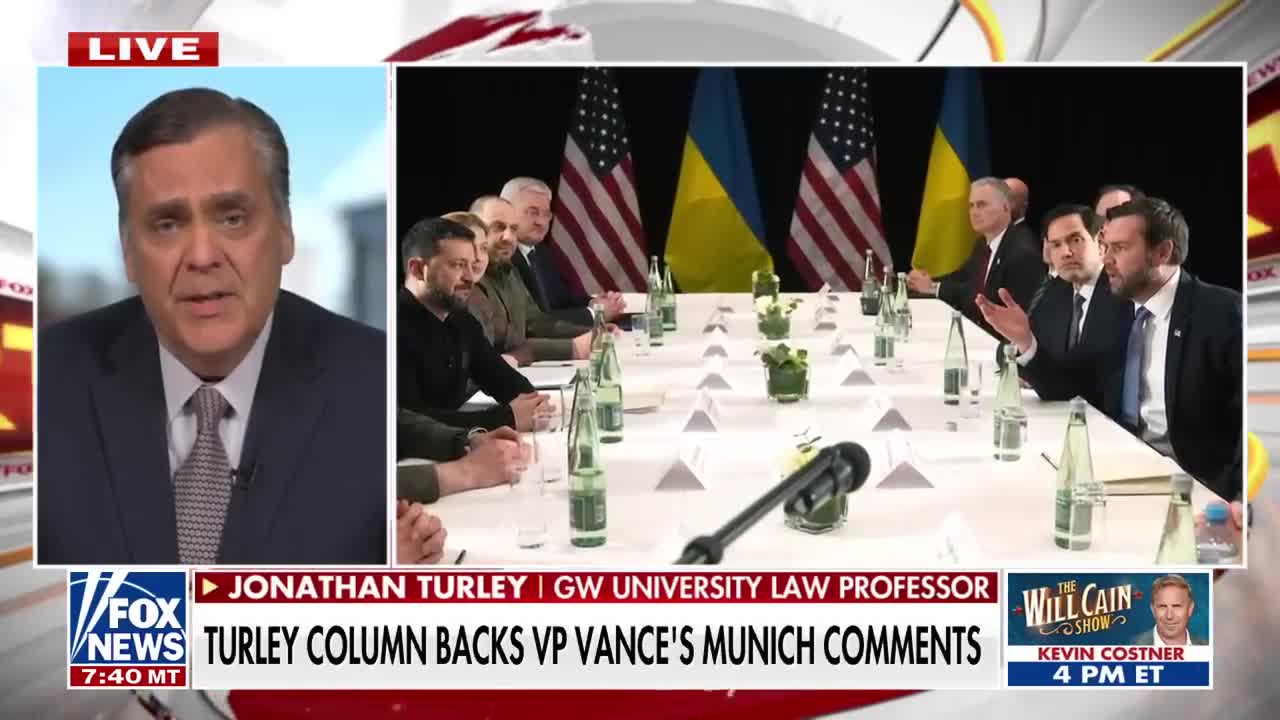
Fox News
04:05 - 04:20
What is the significance of Vice President Vance's speech on free speech in Europe?
Vice President Vance's speech was historic, drawing parallels to JFK's iconic 1963 Berlin address supporting freedom. While Kennedy declared 'I am a Berliner,' Vance proclaimed 'I am an American' who will fight for free speech. His speech confronted European allies, particularly Germany, for undermining democratic values while claiming to defend democracy. Vance highlighted how free speech is in free fall across Europe, with far-right movements gaining ground in Germany and France. The speech represented a significant moment for the free speech community internationally, as Vance challenged European nations to protect this fundamental democratic right.
Watch clip answer (01:26m)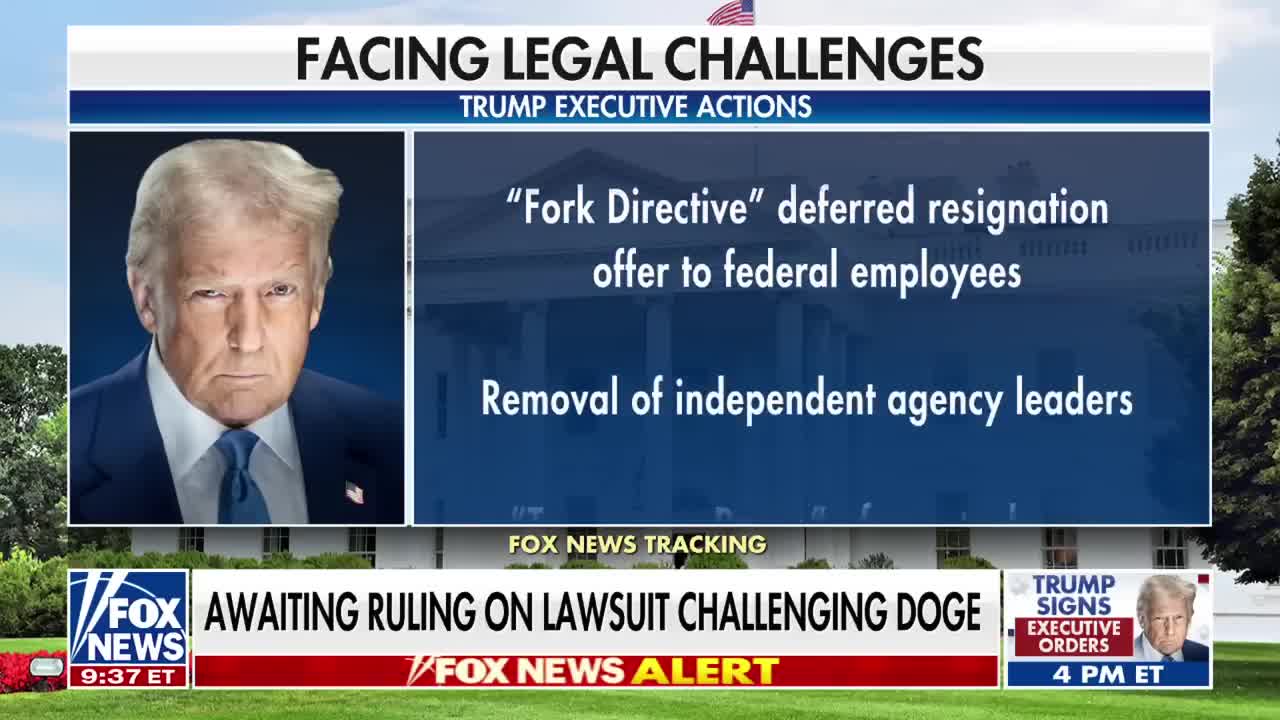
Fox News
01:44 - 03:11
What criticisms has Judge Chukin faced regarding her handling of the Trump case?
Judge Chukin has received significant criticism regarding her handling of the Trump case, including concerns about statements she made about President Trump before being assigned to the case. According to constitutional law expert Jonathan Turley, the most significant challenge she faces relates to constitutional boundaries. Turley believes the constitutional lines in this matter are clear, suggesting the judge may be navigating complex jurisdictional issues that potentially encroach on authority constitutionally delegated to the executive branch.
Watch clip answer (00:18m)Fox News
01:14 - 01:32