
Republican Budget Proposal
How are Republicans responding to President Trump's comments on Ukraine?
Republicans are coming to President Trump's defense regarding his remarks on Ukraine. They assert that Trump has been the only person genuinely working toward peace talks and solutions to the conflict. Republican supporters are shifting blame to Democrats, claiming they should be held responsible for the continuation of the war in Ukraine. Meanwhile, the White House is engaging in damage control, acknowledging that the president is taking a forceful stance in these negotiations.
Watch clip answer (00:25m)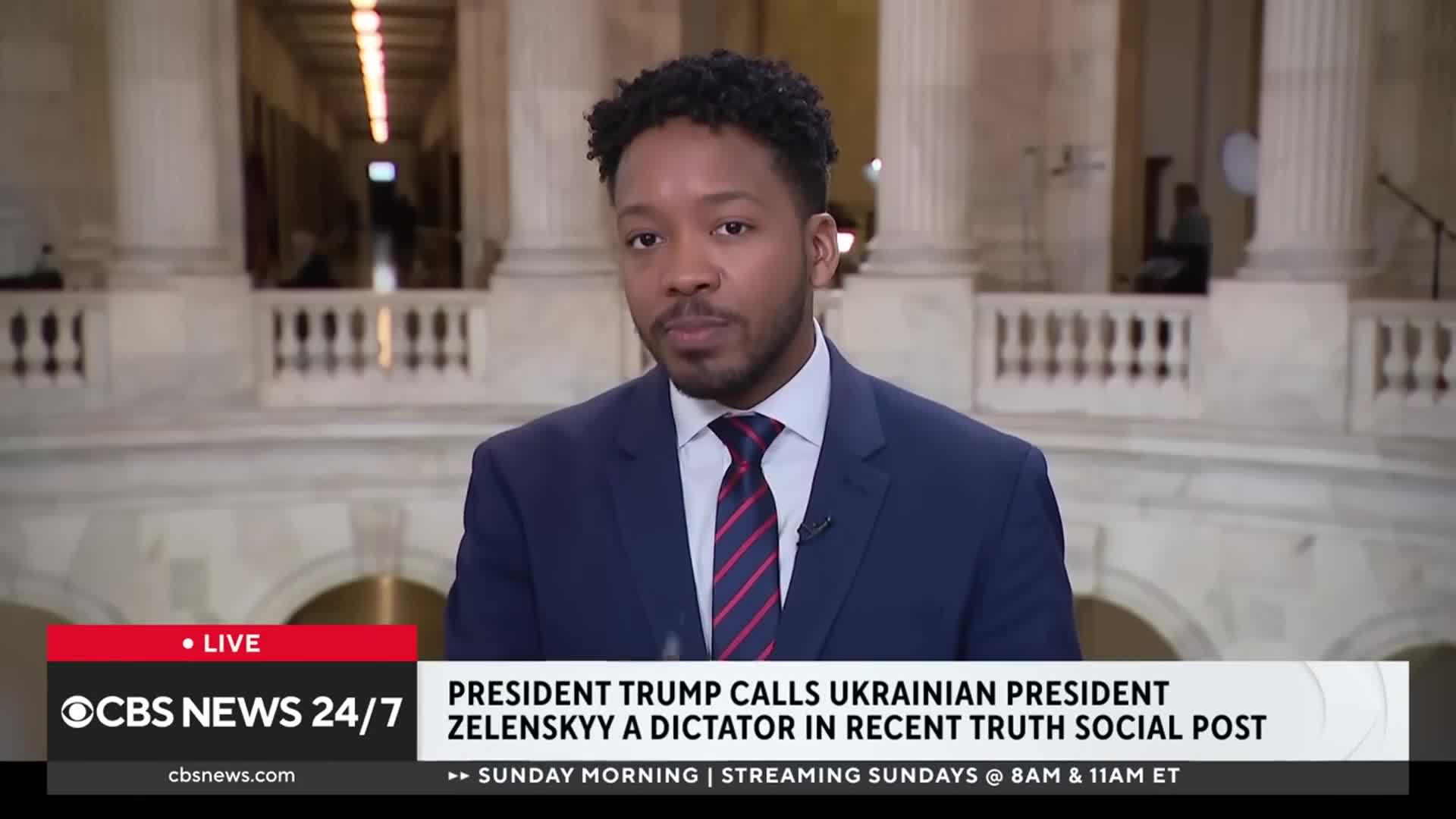
CBS News
07:40 - 08:06
What impact will proposed budget cuts have on biomedical research institutions?
According to Dr. Craig Spencer, the proposed budget cuts will severely impact biomedical research funding, with some institutions projected to lose tens or hundreds of millions of dollars. These cuts will have tangible consequences for staffing, as leaders of these institutions have confided in Dr. Spencer that they will be forced to fire many employees as a result of the funding reductions. The implications extend beyond financial figures to actual job losses in critical research fields, potentially disrupting ongoing medical research programs and public health initiatives.
Watch clip answer (00:14m)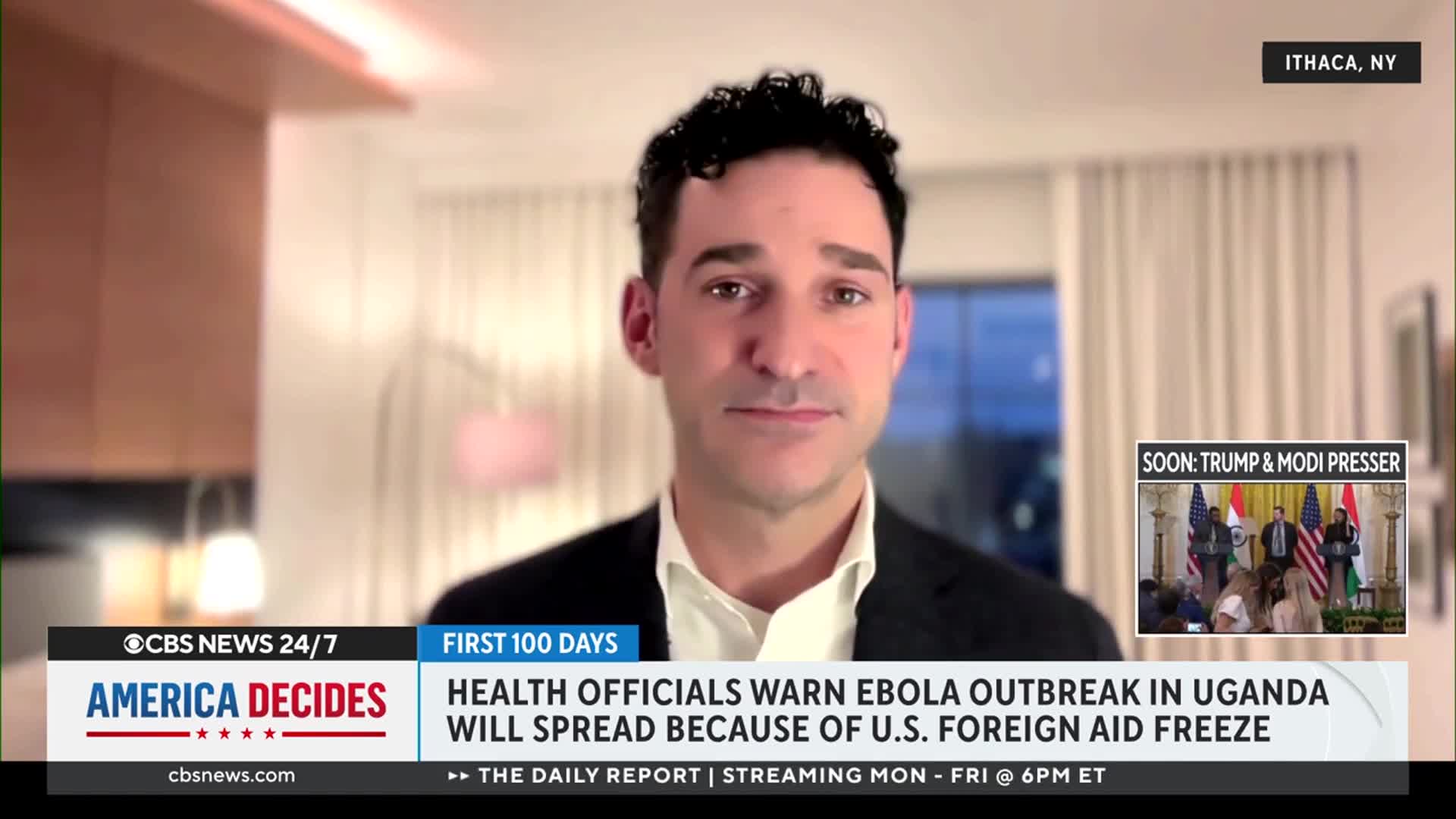
CBS News
04:30 - 04:45
Why are Republican Senators seeking exemptions from Trump's budget cuts?
Republican Senators are seeking exemptions from Trump's sweeping budget cuts because these policies are negatively impacting their constituents and home states. Senators like Lisa Murkowski of Alaska (for Indian tribes), Chuck Grassley of Iowa (for farmers), Katie Britt (for scientific and medical research in Alabama), and Susan Collins of Maine (for universities and labs) are requesting specific carve-outs to protect their local interests. These Republicans find themselves in the difficult position of supporting their party's leader while simultaneously trying to shield their constituents from the 'devastating' effects of his policies. Their requests highlight the growing tension within the GOP as members face the political consequences of federal job losses and program cuts in their home districts.
Watch clip answer (01:06m)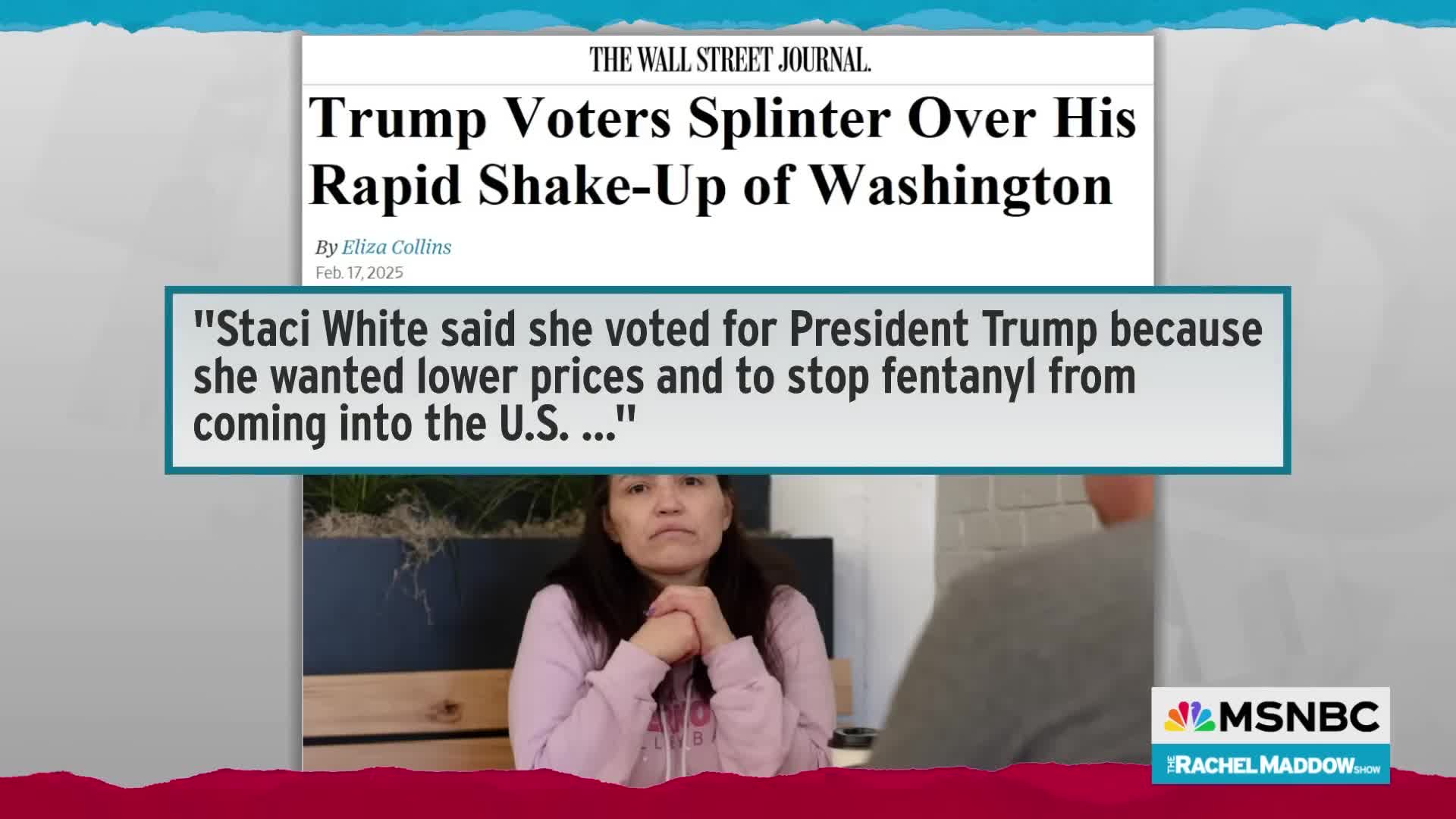
MSNBC
02:39 - 03:45
How might Medicaid cuts impact Republican strategy and voter support?
When constituents begin facing Medicaid cuts or reduced funding for health concerns, Republican representatives—especially those in areas where many Trump supporters rely on Medicaid or Medicare—will likely face significant political pressure. These programs need reform, but slashing funding entirely creates problems for GOP lawmakers. As affected constituents voice their concerns about budget cuts to these essential health programs, Republican members of Congress will be forced to speak up against such measures to protect their voter base. This dynamic reveals the tension between fiscal conservatism and the practical needs of many Republican voters who depend on these social safety net programs.
Watch clip answer (00:37m)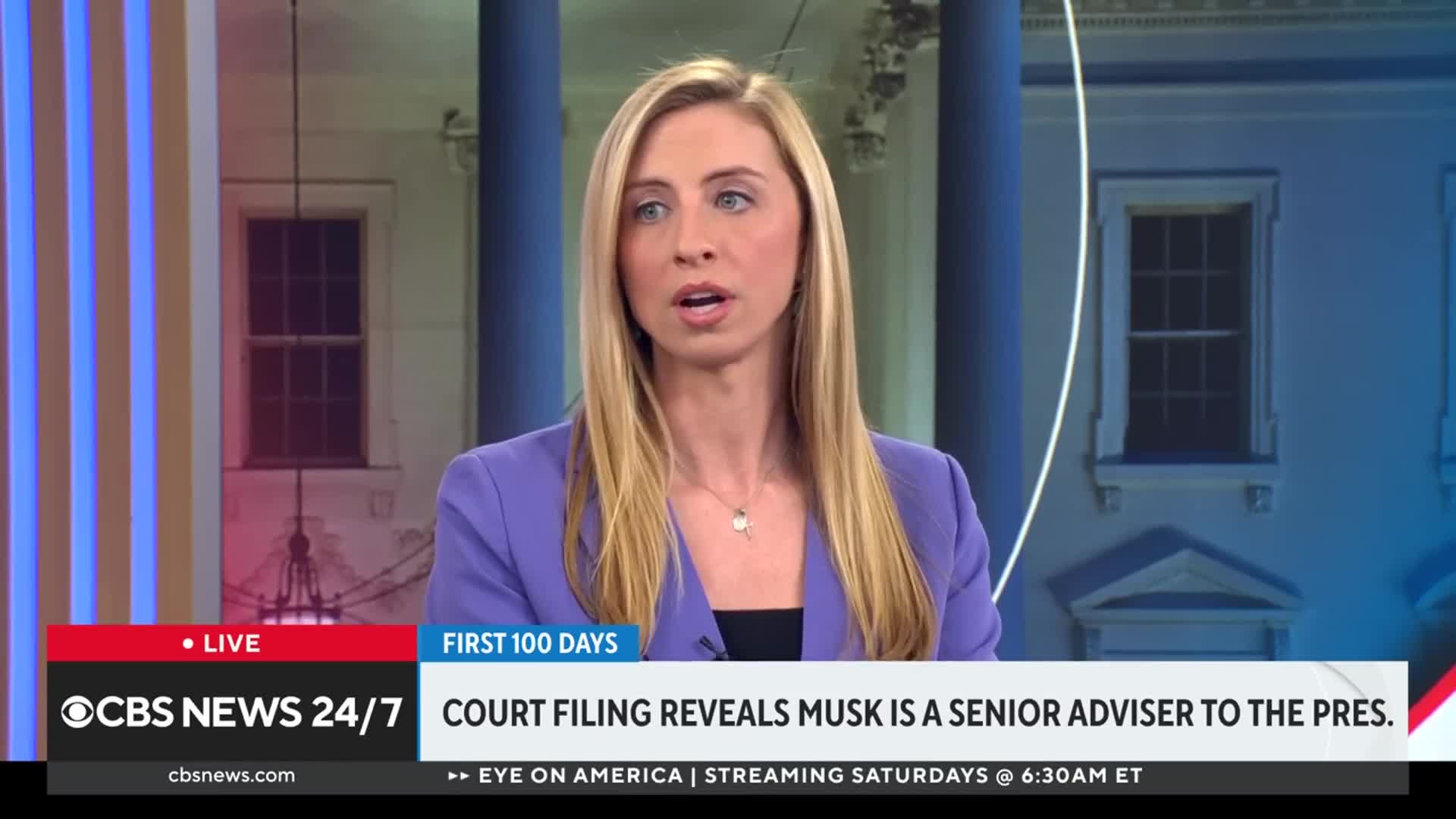
CBS News
02:53 - 03:31
What does Hakeem Jeffries claim is the true goal of the Republican budget proposal?
According to House Democratic Leader Hakeem Jeffries, the Republicans' true goal is to enact massive tax cuts for their billionaire donors and wealthy corporations, which he identifies as the heart of their budget proposal. He argues that Republicans initially promised Americans they would drive down the high cost of living, but Jeffries claims they have lied about this commitment. His critique suggests that the Republican budget prioritizes the interests of the wealthy over addressing the economic challenges facing everyday Americans.
Watch clip answer (00:16m)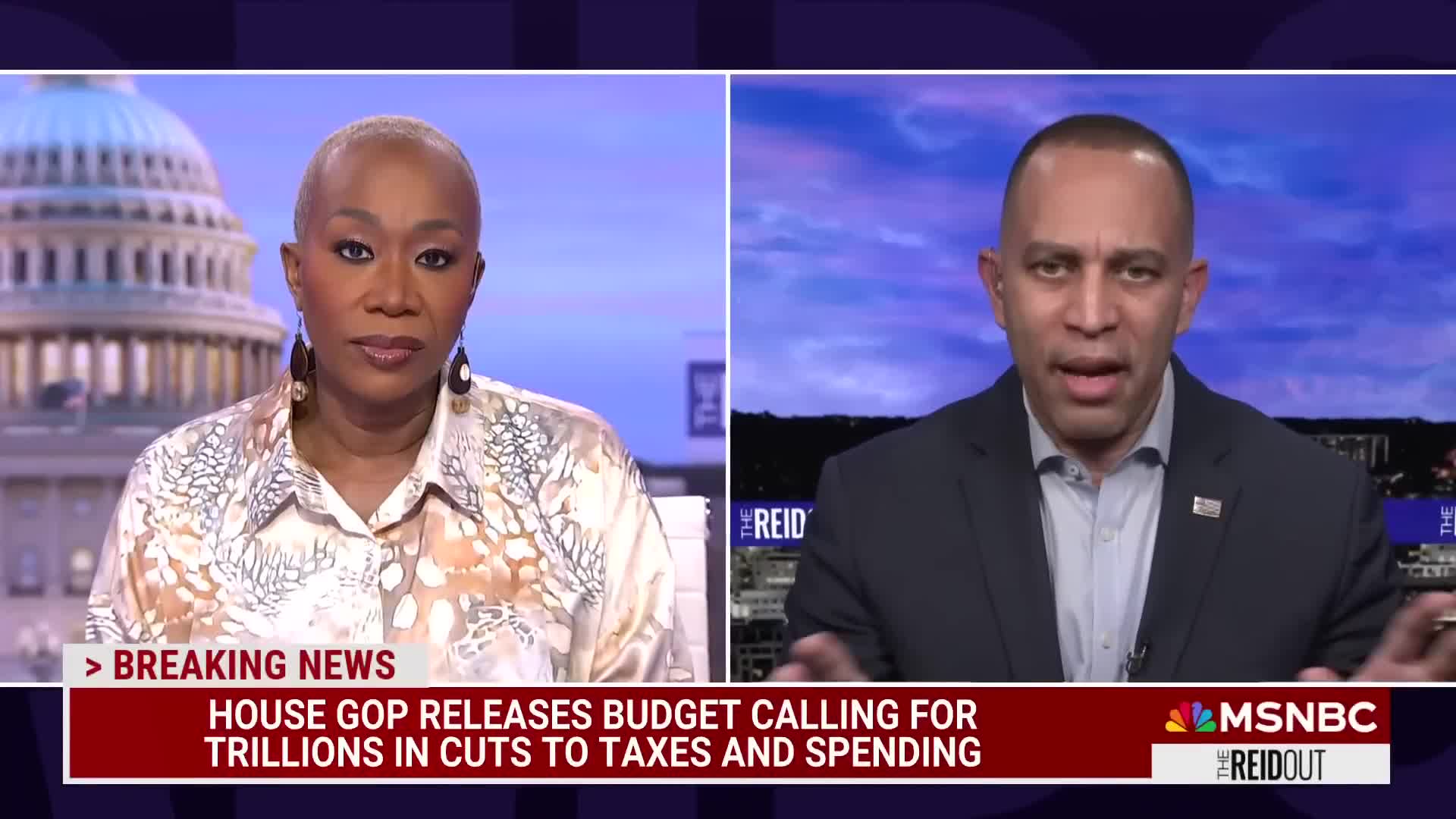
MSNBC
06:43 - 06:59
What is the main criticism of the Republican budget plan according to Joy Reid?
According to Reid, the Republican budget plan is essentially a deceptive strategy to implement substantial tax cuts that primarily benefit the wealthiest 1% of income earners and large corporations. The concerning aspect is how these tax cuts would be funded - by making vulnerable populations bear the financial burden through cuts to essential social programs like Medicaid and food stamps. This approach represents a significant redistribution of wealth that would require those with the least resources to effectively subsidize tax advantages for those with the most resources.
Watch clip answer (00:19m)MSNBC
05:13 - 05:33