
Immigration Policy
How do sanctuary cities impact federal immigration enforcement efforts?
Sanctuary cities and counties pose significant obstacles to federal deportation efforts. According to Homeland Security Secretary Kristi Noem, these Democrat jurisdictions make it difficult to enforce immigration laws effectively. To address this challenge, the administration is collaborating with the Department of Justice, led by Pam Bondi, to develop a comprehensive strategy for prosecuting criminal aliens to the fullest extent of the law. Noem emphasizes that federal law is often more powerful than local sanctuary protections, and the administration is determined to use every available authority to overcome these obstacles and enforce immigration laws despite local resistance.
Watch clip answer (00:46m)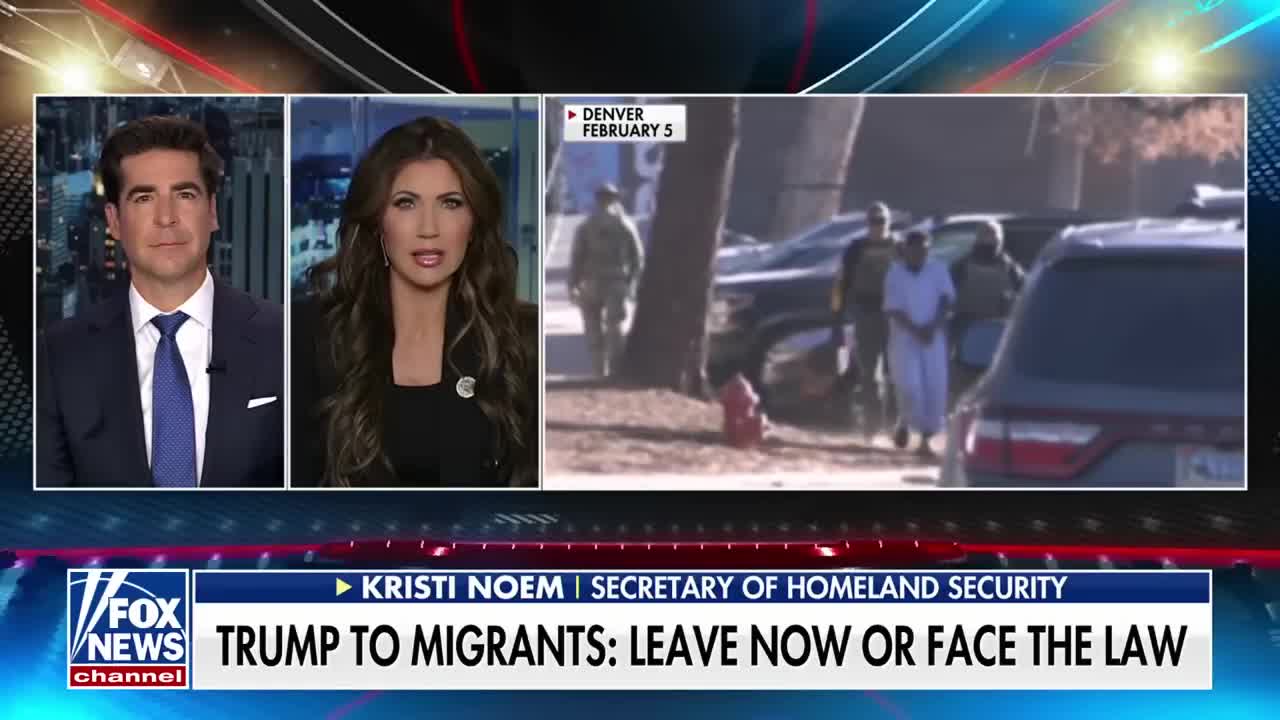
Fox News
01:26 - 02:13
What is the sensitive locations policy and why are faith groups suing the Trump administration over it?
The sensitive locations policy, which has been in place for years, protects churches, schools, hospitals, and other public service places from immigration enforcement by ICE. This policy requires agents to get special permission before conducting any immigration operations in these locations. Twenty-seven diverse faith organizations, including Jewish, evangelical, and other Christian denominations, have filed a lawsuit against the Trump administration over its elimination of this policy. The lawsuit stems from concerns that removing these protections will impact immigrant communities who rely on churches and other faith organizations for social services and worship. This legal action is part of a decades-long trend of religious communities advocating to protect immigrants within their congregations.
Watch clip answer (02:33m)
USA TODAY
05:23 - 07:56
What is Pope Francis' current health condition and how is he being treated?
Pope Francis remains hospitalized in Rome due to a respiratory tract infection that he has been suffering from for over a week. According to Vatican officials, the Pope is in stable condition with no fever, and doctors have adjusted his treatment for the infection. Despite his hospitalization, Vatican officials reported that Pope Francis was able to perform some work yesterday, indicating he is maintaining some level of activity while receiving care. However, officials stated that he will remain in the hospital as long as necessary for proper treatment and recovery.
Watch clip answer (00:31m)USA TODAY
04:28 - 04:59
What does Senator Kennedy criticize about the Democratic Party's performance over the past four years?
According to Senator Kennedy, Democrats have mismanaged multiple critical areas over the past four years including Congress, COVID-19, the economy, inflation, national debt, and Afghanistan. He argues that in their opposition to President Trump and Elon Musk, Democrats have chosen to support bureaucrats and excessive spending over the interests of American taxpayers. Kennedy further criticizes Democrats for supporting illegal immigration over upholding the rule of law. His assessment portrays the Democratic Party as prioritizing bureaucratic interests rather than addressing the needs and concerns of ordinary Americans, suggesting a fundamental misalignment of priorities that has negatively impacted the country.
Watch clip answer (00:34m)
Fox News
01:21 - 01:56
What are the key issues Senator Kennedy criticizes Democrats for doubling down on?
Senator Kennedy criticizes Democrats for doubling down on three key issues. First, he points to waste, fraud, abuse, and corruption, which he warns will cost hundreds of billions of dollars, if not more. Second, he criticizes their stance on men competing in women's sports, undermining traditional gender distinctions in athletics. Third, Kennedy condemns Democrats for prioritizing the rights of illegal immigrants - including those he characterizes as terrorists, murderers, rapists, and cartel members - over the safety of American citizens. He describes these policy choices as 'dumb' and harmful to the country, though politically beneficial to Republicans.
Watch clip answer (00:35m)
Fox News
03:35 - 04:11
What are the protests in Sacramento about and how do they relate to California's federal workforce?
The protests in Sacramento are directed against US President Trump's plans to cut federal jobs and other controversial policies. Demonstrators are particularly concerned about the impact these cuts would have on California, which houses over 147,000 federal employees according to the Congressional Research Service. These rallies, occurring for the second time in two weeks at the California State Capitol, are part of the broader 505-01-5051 movement, which aims to organize 50 protests across all 50 states against Trump's administration. The movement represents significant public resistance to policy changes that could substantially affect California's workforce.
Watch clip answer (00:36m)
WION
03:04 - 03:41