
Climate Change and Sustainability
Climate change and sustainability are intertwined issues that have become critical focal points in global discussions. Climate change refers to the long-term alteration of temperature and typical weather patterns in a place, prominently driven by human-induced activities such as the burning of fossil fuels, which release greenhouse gases like carbon dioxide and methane. This ongoing environmental crisis has led to severe repercussions including rising temperatures, shifting weather patterns, and increased frequency of extreme weather events. As recent analyses indicate, approximately 3.6 billion people live in areas vulnerable to climate change, highlighting the urgent need for effective solutions. Efforts towards sustainability seek to address these challenges by integrating environmental, economic, and social equity elements, ensuring that current needs are met without compromising future generations. This includes adopting renewable energy solutions aimed at carbon footprint reduction and promoting sustainable business practices. Notably, the transition towards sources such as solar and wind energy is crucial for mitigating greenhouse gas emissions. Recent initiatives, including significant climate agreements and technological advancements, emphasize the necessity of cooperation across nations and sectors. Organizations are mobilizing to implement strategies like the Architecture for REDD+ Transactions, which aims to protect and restore forests, further underscoring the multifaceted approach required to combat climate change. As stakeholders engage in discourse around these topics, including upcoming conferences and collaborative projects, the convergence of art, science, and business increasingly showcases innovative paths toward a sustainable future.
What is Climate Impulse and what are its goals?
Climate Impulse is an innovative project that aims to circle the globe in 2028 using a lightweight two-seater aircraft powered by supercooled liquid hydrogen. Led by aviation pioneer Bertrand Piccard, the project's primary goal is to demonstrate the viability of hydrogen as a clean energy source for aviation. The aircraft is designed to complete its global circumnavigation with zero emissions, potentially revolutionizing sustainable air travel. With support from aerospace industry partners like Airbus, Climate Impulse represents a significant step toward decarbonizing the aviation sector, with test flights scheduled for 2026 before its nine-day non-stop journey around the world in 2028.
Watch clip answer (00:12m)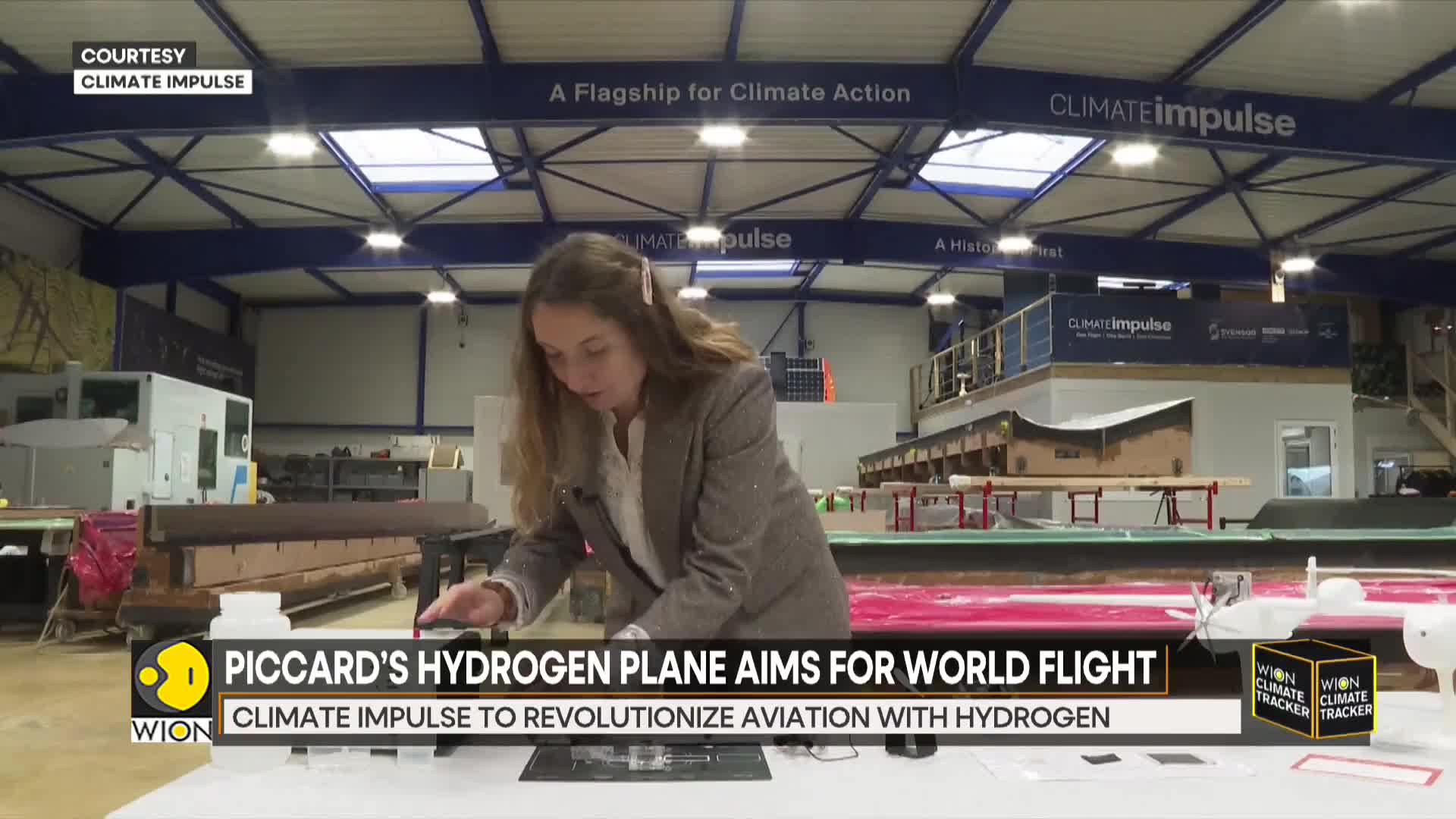
WION
00:11 - 00:23
How does the Climate Impulse aircraft aim to achieve zero-emission flight around the world?
The Climate Impulse aircraft utilizes green hydrogen produced through renewable electricity, which is then liquefied and stored in two large fuselage tanks. This innovative two-seater plane, piloted by Rafael Dinelli and Bertrand Piccard, aims to circumnavigate the globe non-stop over nine days while producing zero emissions. The design features a cockpit between the two massive fuel tanks, allowing sufficient hydrogen storage for the complete journey. By powering flight with green hydrogen rather than conventional fossil fuels, Climate Impulse demonstrates the viability of sustainable aviation technology that could revolutionize the industry's approach to decarbonization.
Watch clip answer (00:31m)WION
01:00 - 01:32
What is the purpose of the Climate Impulse project?
The Climate Impulse project aims beyond just setting a record with a liquid hydrogen-powered aircraft flying around the world. Its primary purpose is to create a demonstrator that can transfer sustainable hydrogen propulsion technology to civil aviation with greater passenger capacity. If successful, Climate Impulse will mark a milestone in sustainable air travel development. Backed by aerospace giant Airbus, the project focuses on advancing hydrogen-based aviation research through a lightweight, highly efficient aircraft capable of harnessing energy from atmospheric turbulence. Despite technical challenges ahead, the scheduled test flight in 2026 will determine whether this technology can truly pave the way for cleaner aviation solutions.
Watch clip answer (01:08m)WION
02:46 - 03:54
What solution does Bertrand Piccard believe will lead to clean aviation?
Bertrand Piccard is convinced that liquid hydrogen will be a key solution for clean aviation in the coming years. While the immediate future involves sustainable alternative fuels—combinations of fossil and non-fossil fuels—to begin decarbonizing the industry, hydrogen represents the path to achieving much cleaner aviation long-term. The aviation sector faces urgent pressure to reduce carbon emissions, and while sustainable alternative fuels offer a transitional solution, Piccard emphasizes that liquid hydrogen technology will ultimately enable a more comprehensive transformation toward truly sustainable air travel.
Watch clip answer (00:20m)WION
02:04 - 02:25
Why do Rio de Janeiro's favelas suffer more severely during heat waves?
Rio's favelas suffer disproportionately during heat waves because they function as treeless urban heat islands composed primarily of brick and concrete. These densely built neighborhoods lack vegetation that would provide natural cooling, instead absorbing and retaining heat from their construction materials. The absence of shade trees combined with the heat-trapping properties of brick and concrete creates microclimates that experience higher temperatures than surrounding areas, making it especially difficult for residents to find relief from extreme heat conditions.
Watch clip answer (00:10m)
WION
02:43 - 02:54
How is the heat wave in Rio de Janeiro affecting the upcoming Carnival festival?
The heat wave has struck Rio de Janeiro less than two weeks before the world-famous Carnival, directly impacting construction workers who are assembling festival installations and raising concerns about the smooth running of events. Despite temperatures reaching extreme levels, Rio Mayor Eduardo confirmed that the city would not cancel any Carnival events due to the heat. This decision reflects the festival's economic importance, as Carnival attracts millions of tourists and serves as a major revenue generator for the city.
Watch clip answer (00:22m)WION
02:21 - 02:43